
Sometimes I wonder if I need to stop trying to be a novel writer and pivot to writing Dungeons and Dragons campaigns. Don’t get me wrong, I love writing, but maybe my true passion is in worldbuilding.
I love the process of imagining and coming up with the details that support a plot. How does the magic work in this world? What is the religion like here? What historical events can add depth to the plot? How do I incorporate traditional ideas with new ones? There is so much that can be done when it comes to worldbuilding, and so many things to draw inspiration from.
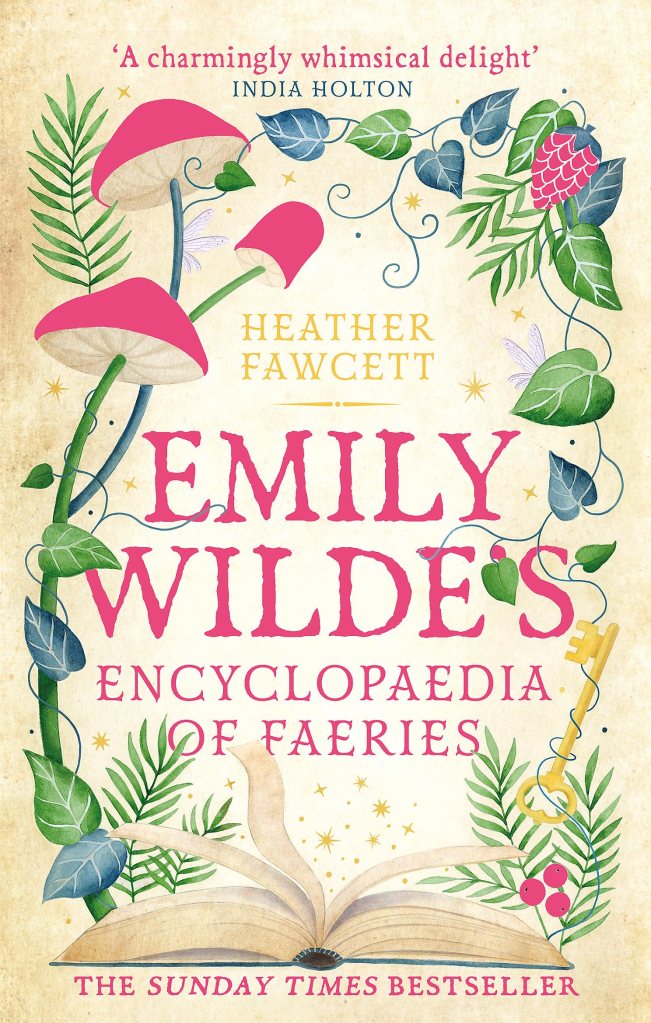
Lately I’ve been reading a lot of books that fit the genre of my current project, Fae Marked. I recently finished Emily Wilde’s Encyclopaedia of Faeries, and was tickled by the way Heather Fawcett incorporated very real (so I’ve been told) European locations with their own fantastical fables of fae. A few other books, The Honey Witch and The Spellshop, by Sydney J. Shields and Sarah Beth Durst, respectively, took place in their own worlds that incorporated the practice of magic. And of course, one of my favorite novels, Margaret Rogerson’s An Enchantment of Ravens, is both a fully fantasy setting that features a colorful cast of fae. It’s been great to read within my genre and see how the novels compare.
I often look to my favorite authors when I do my plotting and designing. When it comes to high fantasy, Brandon Sanderson takes the cake. When you look at reviews for his two main series, The Stormlight Archive and the Mistborn books, his worldbuilding is often one of the first things to be mentioned and praised. That’s how I first learned of The Way of Kings, with my dad explaining to my brother and I the magic of the Windrunner’s and their ability to change the direction of gravity, and the stormlight used to power their abilities. Everything is connected and meticulously planned out, meaning the whole world feels complete and fleshed-out.
My main inspiration for low fantasy is Jim Butcher. I don’t usually work with low fantasy concepts, but anytime I do, Butcher comes to mind. How the hell can he make a series where mythologies are seamlessly blending, to the point that multiple wizards, a fallen angel, a fae summoner, and a storming bigfoot can rob the vault of Hades, all while feeling normal. Nothing is off limits in this world, which is what allows everything to fit together. This is dissimilar to Sanderson in a way, as Butcher continues to add more and more real-world mystical elements
So where does that leave me? Am I a detailed methodical planner, with specific magic systems and worlds with thousands of years worth of history? Or am I more loosely goosey, working in a setting where nothing is off limits, allowing for the blending of the possible and impossible, mundane and mystical? I wish I could tell you.

With several of my projects in my early years of writing, I would get hung up on the smallest details. For Of Voyages and Virtues, that meant looking at complex boat terminology (how many of you can define mizzen mast?). I’d be writing the latest chapter before I’d drop everything and do lengthy amounts of research in order to make sure that I was as accurate as possible the first time around, editing or revising be damned.
I’d often find myself caught up on the small details. “I want to add more dialogue here, but what do I say?” or “what direction are they moving in? Should I make a whole map?”. I can get very easily derailed from the course, caught on small hiccups, and then my flow is gone. I’m a murderer of the flow.

Even when working on things for a Dungeons and Dragons homebrew, rather than working on the actual story, I’d work on miniscule details like historical events, complicated pantheons, and lore I can sprinkle into the adventure. Of course, these things are important to a full-fleshed setting, but in order to actually get to them, you need a storyline first. Go figure.
That’s been something that I’ve needed to learn as I continue my drafts. You can always add more later! That’s what second and third drafts are for, or editors and beta readers to help catch inconsistencies. In college I was a writing tutor, and I would often give the advice to just start writing. We can work out the details later. We can make it better later. They say don’t fix what ain’t broke, but you can’t fix what don’t exist!
Another tidbit I’d pass along would be to write, not with the goal of making it good, but with the goal of just getting something on the page. I’d often say “even if you write a whole paragraph and only keep a sentence, that’s one more sentence than when you started”. Guys, I’m bad at following my own advice. I know, I know, call me a hypocrite, but the need to be perfect is just so paralyzing!
I think that’s part of why I love world building and microscopic details so much. It’s rewarding to fill pages and pages with something all your own, that very few eyes will see and scrutinize. And since it’s all conceptual, it lacks the intensity of the next chapter of a novel. The world building and planning aids in the writing of a good chapter, but a poorly written chapter leads to more work that needs to be done later.
So what’s the solution? I wish I knew. It sounds pretty lame, but practice has been a major help in letting go of my perfectionism. I’ve gotten better at leaving notes for myself and any readers. Now my drafts sport the occasional ‘ADD MORE DIALOGUE HERE’ or ‘BLAH BLAH BLAH PLANNING STUFF’. This helps me keep the flow and continue my pace. These are also opportunities for me to go back and include some of the world building without stopping everything. If I haven’t sketched out a map, I can put a note to adjust the direction or town names later. Placeholders like this let me both enjoy my world building, while preventing those inhibiting hiccups.
One thing I want to incorporate more in my own processes is free-writes. I’m not usually good at letting go and seeing where the words take me, but I’d love to allow myself to loosen the reins and let my wild stallion ideas take control. My writing tends to happen in spurt, but sitting down and dedicating time to writing, with proper warm ups, might be one of the keys I need to improve. I talk about having a teaching toolbox with others in the education field; it’s about time I work more on my writing toolbox!
I could go on and on, but there’s obviously a lot to consider when it comes to my inspirations and practices. Will I stop my crazy worldbuilding sessions? Hell no! Will I continue trying to move past my hiccups? …Pray for me. All I can do is keep on going. Step by step, chapter by chapter, tidbit by tidbit.
This content was written and created by a human, without the use of any artificial intelligence tools. The authors do not authorize this article’s usage in training AI tools. We proudly support the original works of creators and individuals over technology that steals and manipulates original content without consent of creators.

 Pen and Sword Blog
Leave a comment