

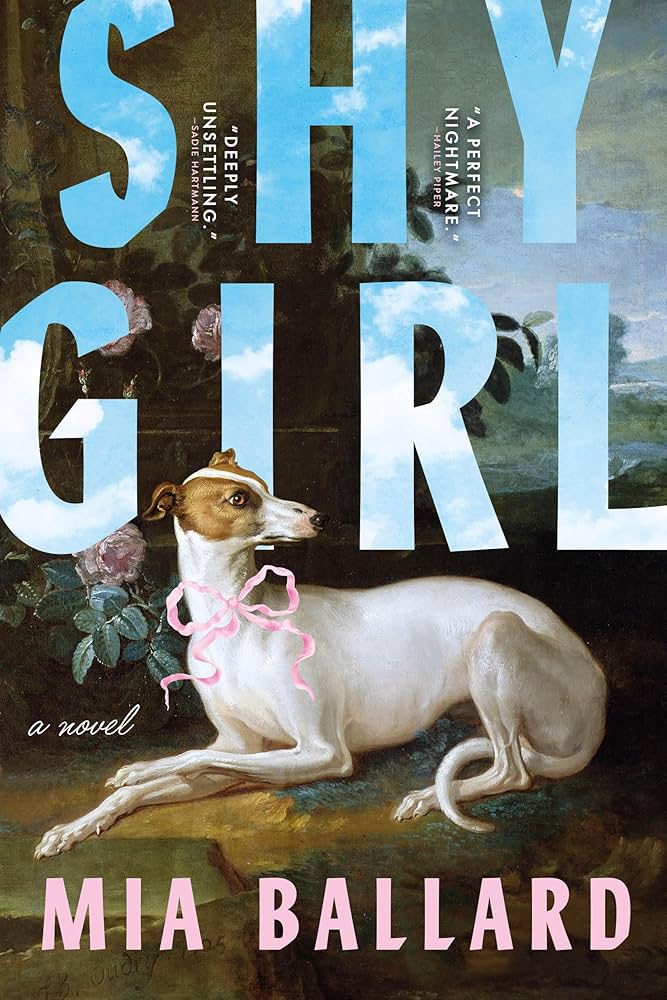
You ever have such a weird experience with a book that you don’t even know how to begin talking about it?
I just finished my advance copy of Shy Girl by Mia Ballard, due April 7th. And for my review, I really just want to post a picture of my face doing something like this-
Not in a good way. I know with a lot of transgressive horror that can be a good thing (personally, I’m a fan of that feeling- see my repeated love for Eric LaRocca), but this face is for the writing. I’ll be ranting about the following topics: discussing the AI allegations surround this book, the weird way my expectations were subverted, and how this thing fell flat.
The AI Allegations
I’d just started reading my eBook from NetGalley when I came across a Reddit thread in r/HorrorLit discussing (pretty thoroughly) the insinuation that this book was written, or at least edited by, ChatGPT.
As a preface, lots of writers are being accused of using AI writing lately, and it’s getting kind of close to witch hunt vibes. People identifying “tells” such as the use of the em dash, certain adjectives, or writing patterns that suggest something was written by AI. What I’ll say on the matter is this: AI tools were trained using real writing. While they are known to poorly mimic real writing quite often, they are spitting out bastardizations of what they’ve been fed. So, if you see an “AI tell” like describing the smell of blood as “coppery”, or the use of an em dash or a three-beat, it does not mean definitively that AI was used, just that the author used a mechanic that’s commonly parroted by AI.
That out of the way, the above-mentioned Reddit thread had a mix of both agreement and naysayers. As for me, having read this book, do I think they’re right?
Dude, I don’t know.
I avoid AI tools like the plague, so I don’t know the first thing to look for. I’ve never prompted ChatGPT. I’ve never used an AI tool for anything (except having to skip past that stupid AI summary at the top of Google results, which is visually unavoidable). As I said before, “tells” are really only so useful, because they’re actually used by real writers too. So, I don’t know if the OP of that Reddit thread was right or not.
Also, put yourself in Mia Ballard’s shoes. If I were a writer with an upcoming release and I was actually innocent of using AI, I would want people to at least read the fucking thing for themselves before throwing accusations.
Which I did.
Why This Direction?
Let’s preface this by saying that since I did not write this book, I have absolutely no right to make any suggestion about the narrative.
But I can complain that I didn’t like it.
Since this book isn’t out yet, there’s no point in including spoilers in this. So I’ll try to be as vague as possible. Basically, Gia is broke, unemployed, and in danger of eviction. So she signs up for a sugar dating website and gets a promising lead from Nathan, who, after their first date, informs her of his strange fetish: dogs. He offers her a considerable weekly income in exchange for coming to his house for eight hours a day and pretending to be his dog, also including sexual acts. She accepts, but Nathan was not being as forthright about her freedom to return home afterward as he had promised.
What I just described is (literally) 46% of the book’s page count. And up until that point, I was actually having a good time! I really liked this unique, weird fuck who wants to hire someone to be a dog, and I actually wrote down a note in my phone that I understood what Ballard was trying to say here: “A commentary on labor-intensive jobs that are degrading, such as customer service. You’re supposed to balk at the humiliation and absurdity of what she’s expected to do, but in reality a lot of minimum wage jobs are just as degrading and hard on the body and they’re paid much worse than Gia. The offer of being Nathan’s dog ties in perfectly by appealing to Gia’s OCD (remember this for later)– the rules, the structure, confines that make her feel safe. I really appreciate that her OCD is intertwined with the narrative rather than just being a character trait with no function.”
That’s literally pulled right from my notes app. As you can see, I was really connecting with the book when I wrote that.
Here’s where I thought we were going: Gia accepts the job and finds that it appeals very much to her desire for rules and structure, but she slowly loses herself in this dog identity and becomes unrecognizable by the end, a metaphor for the way degrading jobs can burn us out and turn us into husks by our mid-twenties.
That’s not where we went. It went the survival story route instead: Gia is held captive by Nathan and forced to live with him full time as his dog. I think that’s pretty easy to guess from the Goodreads description, so I’m technically still spoiler free.
But Ava, what’s wrong with that?
I don’t think she did a good job of it.
For one, I think it would’ve been a much more interesting character development arc for Gia to be there willingly, to eventually stop being uncomfortable with the dog act and begin to lose herself in it. That would’ve been a really nuanced and captivating story.
Instead, Ballard delivers a captive story that just… didn’t do anything new, or interesting, or inspiring.
Time for a related tangent.
I think we’re all familiar with the story of Jaycee Dugard, but in case you’re not: Jaycee was kidnapped at the age of eleven while walking to school. She was then held captive for eighteen years before finally being recognized and rescued. I’ve read her memoir, A Stolen Life, and I highly recommend it, though it is quite hard to read. But I absolutely devoured it, because her survival story was harrowing, dramatic, full of twists and turns, depravity, and incredibly inspiring resilience. She even narrated the audiobook herself, which is just incredibly admirable. That couldn’t have been easy.
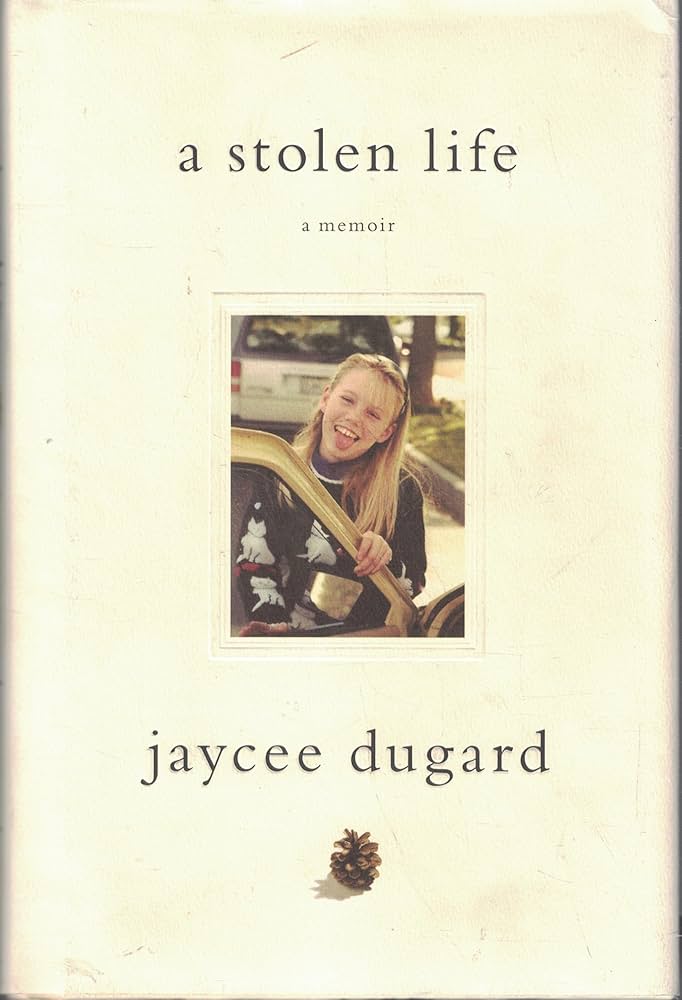
I mention this because this was a real-life, non-fiction captive story. And with fiction, we’re allowed to do things we normally can’t do: put make-believe people into make-believe situations that help us to process things in real life.
And this had absolutely none of the elements of a riveting survival story that I mentioned are present in Jaycee’s- there aren’t highs and lows, twists and turns, heart-pounding moments where escape is almost within reach (there is a chapter about that, but it’s boring as hell), and there’s no uplifting, inspiring, or empowering element anywhere in here. Gia barely fights when he first informs her that she’s not allowed to leave after all, she doesn’t come up with genius little ways to thwart her captor, she doesn’t hang onto and fight for a hope of survival despite the years, nothing.
You know what? I am going to spoil it. Because the more I talk about it the angrier I’m getting. So if you don’t want the ending spoiled, please scroll down until you see the “end of spoilers” heading.
**SPOILER ALERT**
All that happens is Gia gets pregnant, starts turning into a dog (for real, like with hair and claws), and it freaks Nathan out, so he decides to let her go. And I bet you can’t guess it- she kills him before leaving with all her stuff! Ooo, never would’ve seen that coming!
Not that this guy didn’t deserve it, but come on. That was her “girl power, feminine rage” moment? She just killed him? It wasn’t even that exciting of a kill, honestly. Stephen King can draw out a disembowelment for three pages and make it feel like barely one. This just made me go, “Oh, yeah, there she goes, she’s gonna kill him. Whee.”
Gia didn’t have an arc. We didn’t follow along as she harrowingly found herself slipping away, there was no Stockholm Syndrome (very common occurrence in these situations), she was not inspiring or brave/hopeful in the face of hopelessness. She just… was a dog. For a hundred pages. Then he tried to let her go and she killed him. So in the afterward, where Ballard talks about this being a tale of survival and feminine rage, I just kinda went, “I think that’s what you wanted it to be.”
**END OF SPOILERS**
How It Fell Flat: A Good Idea With Bad Follow-Through
This was a great concept, but the story itself just did not deliver. Some may use this as evidence of AI use- it can write sentences that are hard to detect as AI, but it can’t write an entire novel and have it feel cohesive, it’s just not good at long-form. That’s one of the arguments I saw on that Reddit thread. I wouldn’t really say this story isn’t cohesive, just more like that one meme with the horse drawing. Hold on, let me find it.

The beginning was good. Gia was interesting, she had character traits that were directly effecting the narrative, and I was intrigued by the potential.
Then it just… was a book. And it ended.
Again, I didn’t write this book, so I really have no say over its plot, but Ballard should’ve either gone a different way, or made the survival section of the story actually captivating.
Also, nitpick time- there’s a short story tacked onto the end that shows us Nathan before the events of the main part, and it just does nothing. Doesn’t reveal any new information, doesn’t lead us to better understand his character, just fucking nothing. It gave me the distinct impression that this was a short story she’d written some time before, and she included it at the end here with some minor tweaks to fit the characters because the publisher said the main story wasn’t long enough.
I actually had a really great conversation with my dad the other week about endings and how an over-staying epilogue can dampen the blow of the ending. This was a fantastic, real-life example of that (even though the actual ending didn’t deliver any sort of blow or punch).
In Summary (TL,DR)
This book made an intriguing promise but didn’t make any effort to follow through. It really kind of made me mad with how basic of an ending it had, and the insistence that it’s a “feminine rage survivalist” story just irks me. Maybe you’ll disagree with me; maybe you’ll get it when it comes out and think it was great. Maybe you’ve also gotten it in advance and you liked it and you’re mad at me now. But bottom line, it caused a strong enough reaction in me to prompt me to write this (let me check…) 1800 word blog post about it.
If any of you do read it, I’d be curious to know if I’m just being a Picky Polly or if you also think it fell flat.
Recommended Reading
If you want to read some stories about women surviving abusers that actually do deliver and are uplifting and inspiring, here are three that I’ve read and really enjoyed:
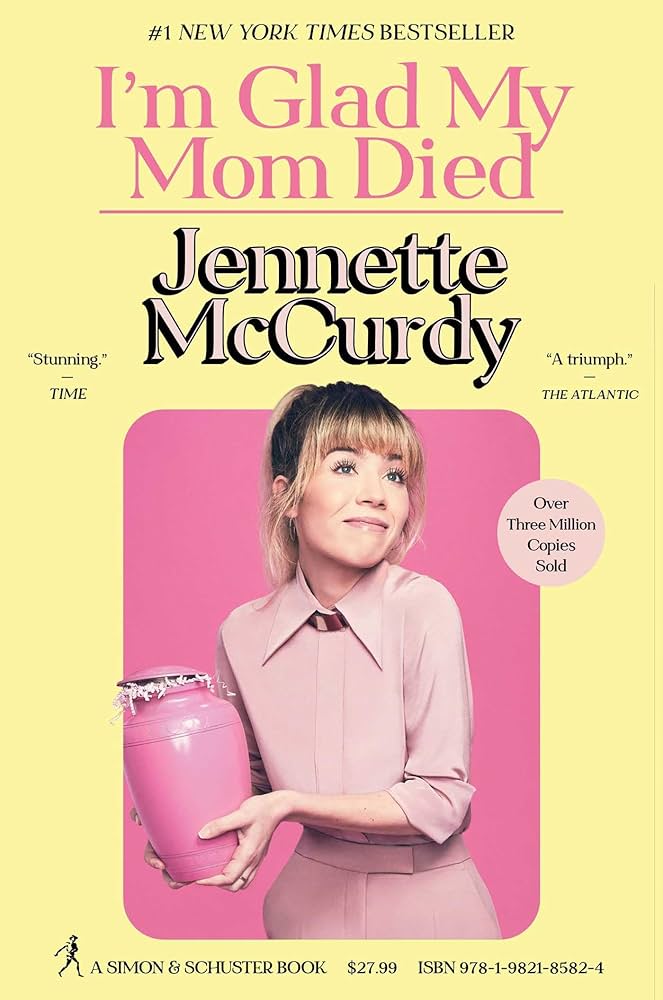
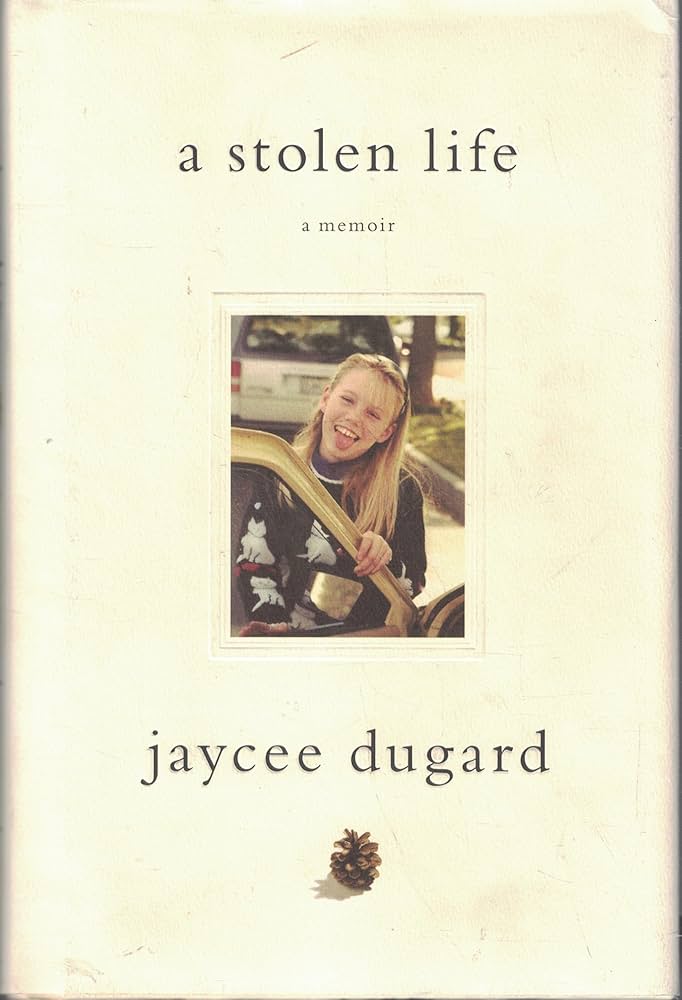

Also, for some actually good feminine rage, see Maeve Fly by CJ Leede and The Eyes Are the Best Part by Monika Kim.
Monthly Writing Goals Update
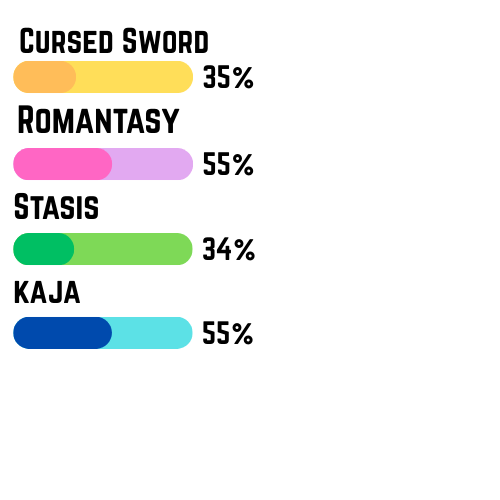
Word Count: 23,243 / 20,000
I don’t even know how that happened.
Actually I do. I don’t want to say too much yet, but Saige and I are working together, co-writing a piece that I think it’s safe to say we’re both really excited about. I’m in love with this concept and I think it could be some really great work. Stay tuned for more on that.
I also pecked away a tiny bit on Stasis, not much more than a chapter, and I started a scene in Romantasy that I’ve been excited to write for a while. But most of this week’s word count came from our secret co-writing project.
We’ll see where I end up for my total after the last three days of the month!
This content was written and created by a human, without the use of any artificial intelligence tools. The authors do not authorize this article’s usage in training AI tools. We proudly support the original works of creators and individuals over technology that steals and manipulates original content without consent of creators.

 Pen and Sword Blog
Leave a comment