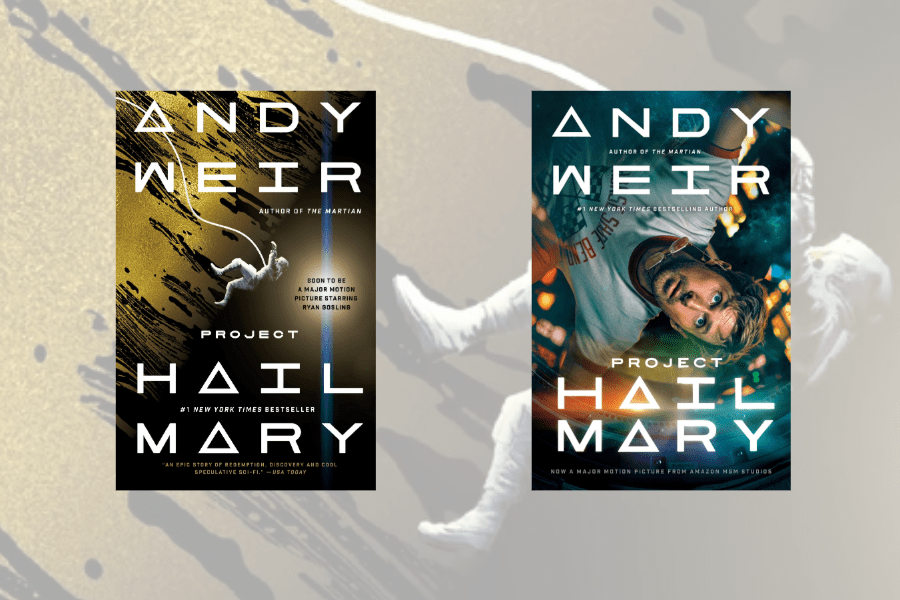

This article will contain discussion about both the book and movie for ‘Project Hail Mary’. While explicit spoilers will be disclosed as they appear, the article as a whole may contain general plot points or details of the book/movie. Reader discretion is advised.
This article was written during the week of March 15-21st, but is being published later to give people more of a chance to watch the movie.
Pre-Movie Discussion
In my last quarter of college, I took an advanced fiction writing course. It was an awesome class, where we focused on plotting a personal project and perfecting an opening chapter. I learned a ton from that class and walked away with a banger novel outline (which I haven’t touched in almost two years…).
For the first half of class, we were assigned in novel to read. My professor could have picked anything for us to read. A classic like The Hobbit, or a book from a beloved author like C.S. Lewis or Terry Pratchet. But my professor chose none other than Andy Weir’s Project Hail Mary for us to read. And it was such a treat.

The novel follows the journey of a man named Ryland Grace, who wakes up on a spaceship with little memory of how he got there. As he figures out where and who he is, he begins work on a mission to save Earth, as he is its last chance for survival. He needs to figure out how to prevent the sun from losing its energy due to a microscopic entity known as astrophage, which is slowly diminishing the amount of heat energy the Earth gets. In order to prevent global extinction, he needs to find its origin point and any hint on how to stop it. Talk about pressure.
The book follows two timelines: the present, as Grace and an unlikely friend perform experiments and discover the secrets of astrophage, and the past, which are given to us as the memories Grace is slowly regaining after his time in a medically induced coma. The past teaches us the importance of the mission, Grace’s role in the creation of the mission, as well as his personal incentive for joining what he learns is a one way ticket. The stakes are high, the science is fascinating, and the characters are wonderful.
Not only is the book stellar, but we got to break it down and see exactly what made it work. We talked about the plot, and, most importantly, how the two timelines come together to make some stunning reveals. We discussed how the science is presented in a way that makes it palatable to the average reader. And we talked about the heart of the book, how the characters are what make it tick. Needless to say, my class and I loved this book.
A little while after the class ended, we were treated to the news that there would be a movie adaptation. We were cautiously optimistic, many of us excited for Ryan Gosling to play Ryland Grace, and the more we heard, the more excited we got. We were going to see our beloved book adapted well, and hopefully watch more and more people fall in love with PHM.

Fast forward to like. Now. March 14th, to be exact, where I purchased two IMAX tickets for myself and my boyfriend to see the movie one day early on the 19th. I was ecstatic. So excited to see how it all came together. There was only one thing I could do.
Reread the book, of course!
It’s been about two years since the first time I read it, and there were some details that were a bit fuzzy. When did the reveals of Ryland’s past happen? What were the specifics of the mission and the science practiced on board the Project Hail Mary? And will Ryan Gosling really play the perfect Ryland Grace?
On the 15th, I hit play on my audio book copy of PHM (which, if you haven’t read the book yet, check out the audio book version! It won awards for a reason). I listened to it in two days, greedily gobbling down the contents in between seeing clips and scenes from the movie. Reviews were pouring in. 95% debut on Rotten Tomatoes. Letterboxd top 100. Rave critical reception. I could not be more excited.
One thing I enjoy doing when I watch a movie adaptation is noting the differences. Sometimes, differences greatly bother us. Like why did they create a whole pearl side quest in the awful Percy Jackson movie? Other times, minor differences make perfect sense from a movie standpoint. In the book for The Hunger Games, Katniss gets her pin from the mayor’s daughter and her friend. In the film, she finds it in The Hob. It makes perfect sense for the movie to cut out much of the events in District 12 so the ball can get rolling. This difference didn’t bother me much.
Even from the trailers from PHM, I noticed a few differences. A character was added to certain scenes where Grace is experimenting with the astrophage. I imagine this character is inconsequential and very minor as far as the plot goes, but for the narrative telling of the movie, it makes perfect sense to add a character where in the book there wasn’t one. To explain things to the audience.
As a reader, we’re welcome in Grace’s mind and go through the experienments with him. In the movie, we likely won’t get voiceovers of his thoughts. Instead, this rando guy has been added in so Grace can explain the science to him, and therefor, to the audience. It’s a minor change, but one that makes perfect sense from a movie perspective. We don’t need other people in the book. But the movie watchers will learn the science vicariously, instead of directly. How cool is that?
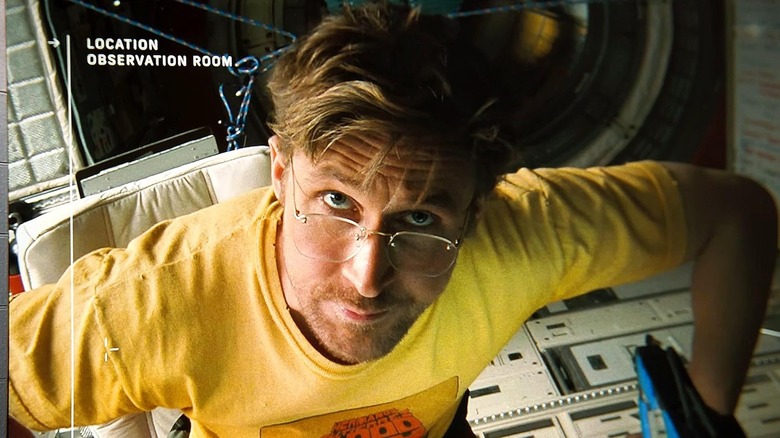
On a similar vein, the teasers show Grace talking to a camera, taking video logs, much like Matt Damon’s character in The Martian, another Weir book-turned-movie. Grace doesn’t do video logs in the book, but once again, this change is likely added for the sake of the viewer. Grace can talk ‘to’ the audience, letting them into his thoughts and granting insights into what he’s thinking. It worked very well in The Martian, and the Saige who is writing this before seeing PHM thinks it will also work well here.
One last thing I want to talk about before I see the movie is the ending. I won’t spoil too much here, but I’m a little meh on the PHM ending. Don’t get me wrong, I think it serves the book just fine, but there was a certain something I was missing. I felt like there were a few too many open ends regarding some of the characters left on Earth (IYKYK). I’m not saying that I hope they fully change the ending, but let’s just say I hope a certain someone gets properly told off for their actions. Maybe Grace’s video recording will reach her. We’ll see how things go!
Post-Movie Discussion
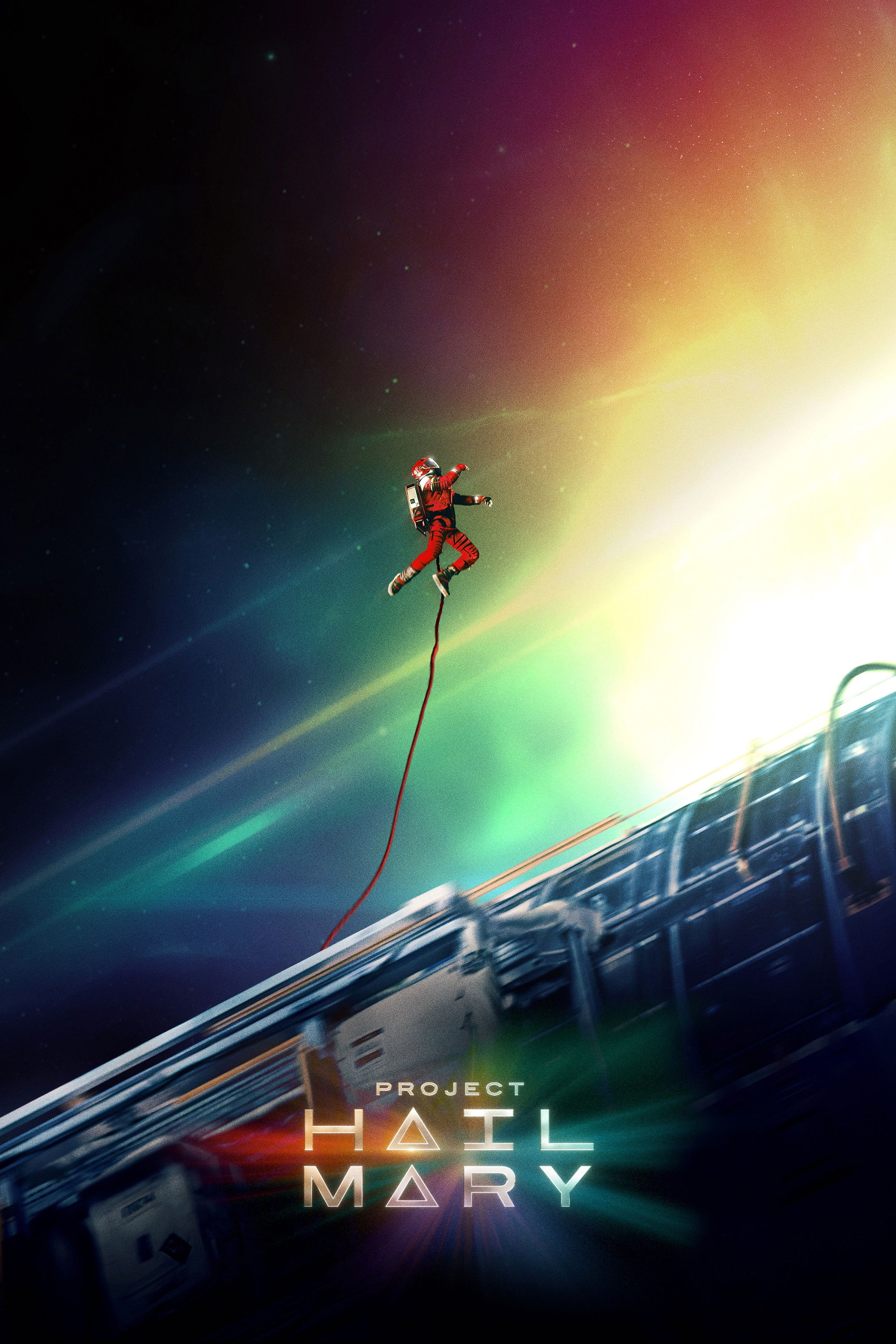
It is March 20th. I saw the movie last night. And my mind. was. blown. I think I cried like, six times. It was so good and maybe one of the best movie adaptations I’ve ever seen. I highly recommend it to anyone who is even vaguely interested.
I could go on and on about how great everything looked. I could talk about how phenomenal that sound track was. And I could talk about how good looking Ryan Gosling was the entire time. But, since this is a book blog, I will be focusing on how the movie compares to the book.
As a whole, the plot was kept the same. Very little was changed, in fact, that if I hadn’t just reread the book, I wouldn’t have noticed most of the omissions/additions. And I’m not mad about any of them. The rhetoric behind a book and a movie is very different, so changes are only natural. It may seem like I’m being nitpicky here, but again, I don’t mind any of the differences I spotted. I just like pointing them out.
Let’s start with additions: things that were added in to round out certain plot elements or interactions.
We started the movie watching as Grace crashes out. He does do this in the book, but very differently. There, he turns to science in his break down, while we see the movie version give us a very human performance. We see him be sad. We see him upset. We see him confused. We start off with a simultaneously humorous and heartbreaking performance that sets us up for the emotional ride that is just getting started. A bit more on the removal of the science-y portions later.
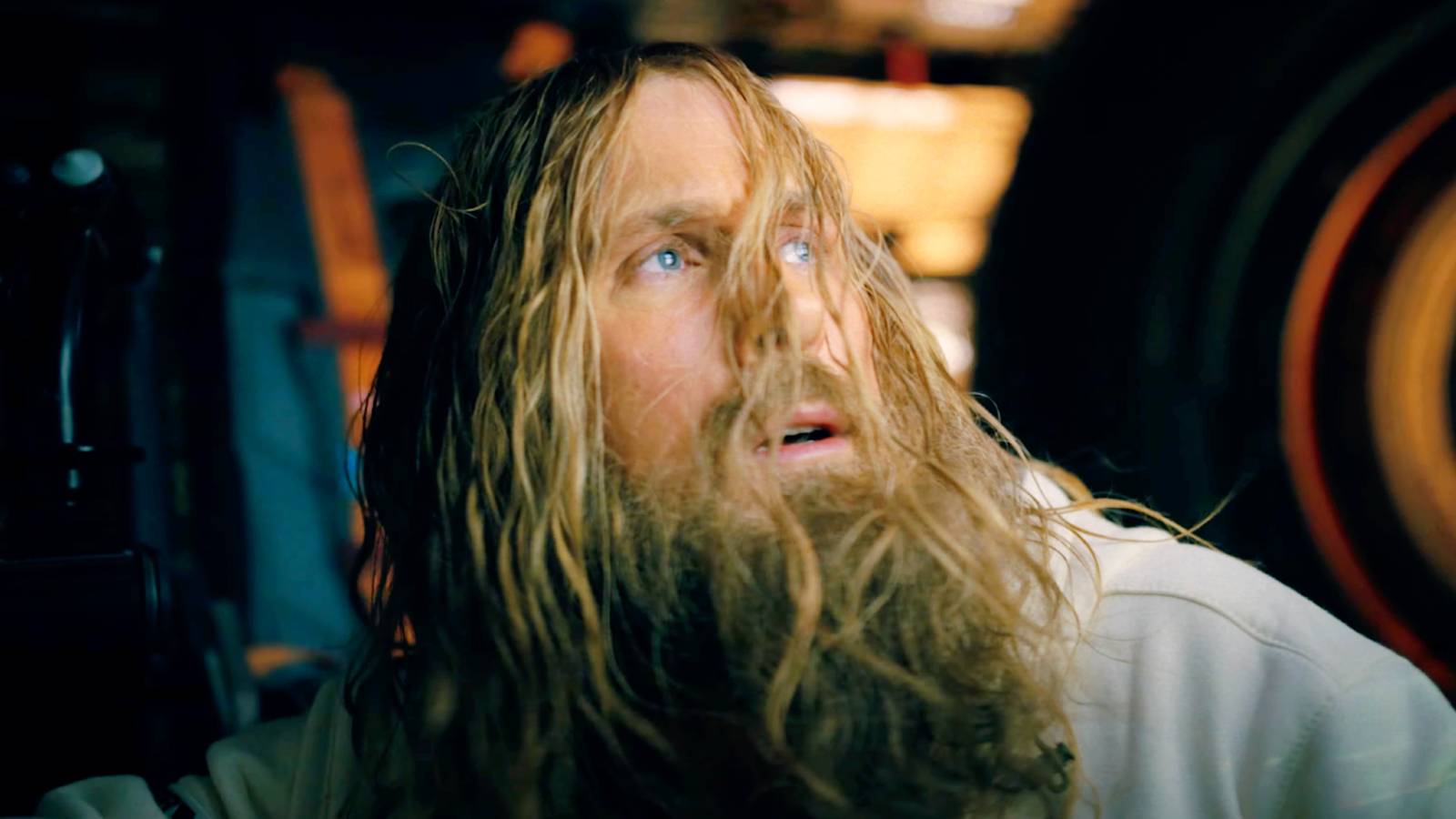
Obviously, as I mentioned earlier, there was the addition of Carl, one of the security guards that is present for many of Grace’s initial astrophage experiments. And like I said above, he was present to be the fill-in for the audience. Grace explains things to him, which makes sense narratively, and the audience is kept in the loop as a result. Win-win.
The video journals, once again, were just as I suspected. Ways for Grace to talk ‘to’ the audience and explain his thoughts. I liked the added detail that they were included in the probes he sent back to Earth. I always felt like there was this disconnect in the novel over this. In the book, he kinda just. Sends them. Doesn’t mention leaving a note, doesn’t say anything to Earth, and doesn’t acknowledge what Stratt did to him (again, iykyk). I’m really glad that the videos were added in the movie. I’m glad we got to see Stratt receive them. And I’m glad Grace acknowledges that she did the right thing, even if he wasn’t happy with it. It really solves a lot of the problems I had with the ending of the book. But more on that later.
Speaking of Stratt, let’s talk about the karaoke scene.

I think the movie did a good job of humanizing Stratt a little bit more. In the book, she’s very deadpan and almost cutthroat in her actions. She cares very little for the consequences, so long as the end result is a successful launch of the Hail Mary and a crew that’s set up for success. Everything else is secondary.
The biggest thing that endears us to Stratt is the added scene where she sings one of the anthems for the movie, Harry Style’s Sign of the Times, a song all about finding hope in chaos. Sound familiar?
Not only was the rendition really well done, but it perfectly humanized Stratt and gave the viewer a glimpse into her intentions and motivators. Into her goal. Her job requires her to be brutal at times, but deep down, what she wants is whatever is best for humanity at large. It’s a steep ask, something no one should need to shoulder alone, and in this moment, she lets characters like Grace and the other astronauts see into her vulnerable interior. I loved this addition.
On a related note, the added scene of Stratt watching the clips Grace sent. I loved seeing her smile and be emotional at the success of her mission. That all was not in vain. That making the decision she did was worth it, and understood, by Grace in the end. So good.
One addition I was iffy on was the inclusion of the projector/screen room on board the Hail Mary. It confused me at first. Why did we need this? What purpose does it serve? On a ship where the priority is science, how would this 360 projector room help them out? It made no sense.

I hated it less when it showed up in the montage of Rocky and Grace bonding. When Rocky got to learn all about Earth. When Grace got to remember what he was saving, what he was fighting for, even if he knew he’d never see it again. Once again, it added some tenderness and vulnerability. And in a visual medium like a movie, it makes sense for us to be able to watch these moments happen. I still think it makes very little sense to have this room included in the HM, but I can forgive it.
The last major addition to the plot was the scene in which Grace dons his own xenonite bubble and gets to go onto Rocky’s ship. I was once again iffy on this. It’s a running joke in the book that Grace is dying to see Rocky’s ship, but never gets the chance. I found it really funny in the novel. I don’t this the addition here of the ship visit did a lot for the plot, but once again, it did help with the emotional connection between Grace and Rocky, as they prepare to go their own ways. It shows how fully they share their science and world with the other, proving the bond they have made goes both ways and is stronger than the lightyears that they think will separate them. I can also forgive this one.
Also??? The ship looked cool AF, but was I the only one that was really confused about how the hell it flies? I hope not.

Now let’s move onto the omissions. Most of what was trimmed down comes from Grace’s time on Earth, which makes perfect sense. We got the essentials, and needed the focus to be on the mission at hand. A lot of the side details got cut. In my mind, many still happened off screen. I wouldn’t be surprised if there are cut scenes or scripts that include many of these moments.
One omission that makes perfect sense is the trimming of the super science-y portions. We’re watching a movie, an audiences can only handle so much pure science talk. While these portions in the book were done extremely well, I don’t think they would have translated well to the movie screen. Some of the cuts were a little sad to lose, like in the beginning where Grace uses pendulums and measurements to figure out where he is and the gravity of the ship, showing his intellect and problem solving skills. Others I was fine with the trimming, like the boooooring section where Grace is figuring out how the taomoeba escaped and ate the fuel. I didn’t need that in the movie. I’m glad that now there are two ways to engage with the science, and that we can always go back and enjoy Weir’s brilliance in the novel.
One scene I’m sad was cut, but still happened in my heart, was the portions involving the nuking of antarctica to force global warming. What a wild sentence to type. I actually really liked these moments in the book. They once again show the lengths Stratt will go to in order to give humanity a fighting chance. And the science behind it makes quite a bit of sense. If astrophage is going to cool the planet down, but humans have this nasty habit of heating it up, lets just turn it to an eleven and send a bunch of greenhouse gasses into the air. I also liked the climate scientist that was present in these scenes, and how he felt disgusted by his actions, but understood it was likely for the best. Such a fascinating concept.

One thing that’s brushed over in the movie is the astrophage breeding facility that’s created in the Sahara. A lot of energy is needed to breed astrophage (hence why the sun is dying), so a lot of energy needs to be harnessed. What better way than to use the sunlight that shines over the barren landscape of the Sahara desert? Once again, we have a character that was cut from these scenes, this one being the Australian business man who Stratt frees from prison, since his company has the resources (makes more sense in the context of the book, I swear…). Again, I can see why this was cut. He doesn’t play a huge role and viewers can suspend belief over the creation/semantics of the astrophage breeding.
While I find some meaning to the two cut portions above, I’m glad that the court scene where Stratt is sued over copyright infringement was omitted. Basically, Stratt includes the sum of human knowledge on the laptops on board the Hail Mary. In doing so, she breaks a ton of laws, and gets sued for it. She shows up in court, says she has permission to do whatever she wants, and leaves. It does a good job of showing the extent of Stratt’s power, but other than that, feels wholly unnecessary. I never would have questioned the resources given to the Hail Mary crew, but I guess Weir was worried I would, because he included this scene here. I’m glad it wasn’t in the movie.
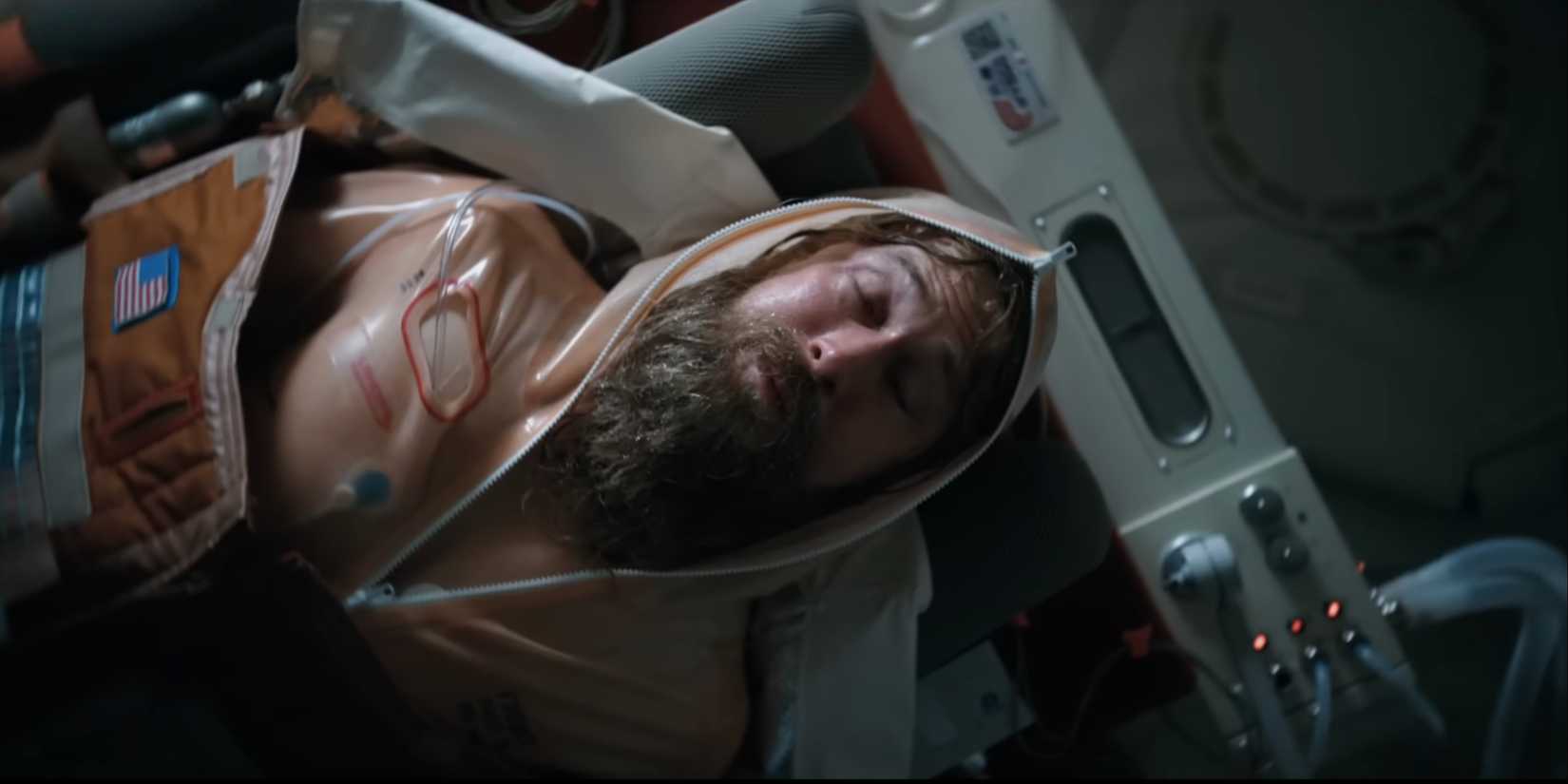
Conversely, I did really miss the removal of the coma gene from the plot. I can understand why it was taken out, but I miss the impact that it had on the plot, and how it explains Grace’s involvement in the project. In the book, the coma technology is reliant on a specific gene that a small percentage of the population has. In order to go on the mission, you need the gene. So the pool of scientists and astronauts, which already felt small, is made even smaller. Grace just so happens to have this gene.
Huge book spoilers below.
In the book, it’s revealed that Grace having this gene is one of the only reasons Stratt kept him on the project. Why he knew as much as he did. Why he helped train and manage the mission. He was always a secret back-up for the back-up. That’s why a middle school teacher was kept around for so long, when any number of people could have taken over for him. And when the accident kills the two science specialists, Stratt’s hidden contingency plan pays off. Grace is sent, unwillingly, on the mission.
While I’m fine with the complications of the gene and coma stuff getting cut, it does remove one of my favorite plot points as a result. Several times, Grace asks ‘why me’. This gives us our why. It explains why a disgraced scientist turned middle school teacher would be given so much influence and attention. He was the secret third option.
I also think cutting this helps dial down Stratt’s ruthlessness a bit. It it were revealed that he was only kept around just in case he was needed, it would diminish their relationship and the tender moments that they have in the movie. In the books, I want Grace to give Stratt a big middle finger. In the movie, I liked his quiet acknowledgement she received from his videos. It all works in the end.
Wow. I did not mean to write 3k words about this novel-turned-movie (who am I kidding, I totally did). But I needed to express my appreciation for the book, the film, and the relationship they share. This is one of the most faithful adaptations I’ve seen. And while many adaptations make you scratch your head and say “why did they do that?”, I never really did that here. I could see the reasoning behind all of the changes.
Please, PLEASE, if you have only enjoyed one version, go check out the other. They both are amazing examples of sci-fi excellence and are masterpieces within their own genres. I can’t wait to enjoy the movie again as soon as it comes to streaming.
This content was written and created by a human, without the use of any artificial intelligence tools. The authors do not authorize this article’s usage in training AI tools. We proudly support the original works of creators and individuals over technology that steals and manipulates original content without consent of creators.

 Pen and Sword Blog
Leave a comment