
You may have seen me mention a secret co-writing project with Saige in my writing goals section for a few weeks now. While we’re still keeping it secret, it has given me a (quite monumental) challenge that I’d like to discuss.
Without revealing too much, I will be needing to compose several pieces of poetry to include in the project.
But Ava, you’re not the poet- that’s Saige!
You’re exactly right, dear reader.
So, then, why did you assign yourself the task of writing poetry knowing full well it would be included in a project that real human beings might read with their eyeballs despite never once in your life feeling like you understood anything about poetry?
Because I am a fool!
No, but really, I thought it would be a cool challenge. I believe that one of the greatest joys of being an artist is to be able to see yourself grow through your work. I’ve always seen poetry as this unknowable, mysterious giant looming in the mist. This project is so dynamic and unique that it really made me want to push myself and make it about growth.
Luckily, the poetry I’m tasked to write is technically supposed to be written by a complete amateur, so nobody should be expecting masterpieces in there. At least I gave myself that.
So, how the hell do you write poetry?
Here’s what I knew going in.
I knew that the most common form of poetry is song lyrics, which almost always rhyme. I have some experience writing these (casual mention of my old high school rock band days, no big deal), but I find rhyming exhausting, and I knew I needed a good amount of pieces for the project.
I’ve also read some of Saige’s poetry, which is very good at painting vivid pictures in my head and making me feel a very specific kind of way as I’m reading it. Her poetry isn’t so dense and avant-garde that I have no idea what the hell I’m looking at as I read it, which is fantastic. If you haven’t yet, you should really go and buy Saige’s new chapbook from Bottlecap Press- I’ve read it and it’s fantastic.
Aside from the occasional poem I had to read and analyze in high school classes, that’s pretty much the extent of my experience with it.
Starting with this level of poetry comprehension, I wrote three poems for the project, which I am not going to share here because 1. they’re bad and 2. they’re still going into the project, so you’ll see them later. After writing these three pieces, I knew what I had put down was not great.
So, I consulted Saige, of course.
Phase One: Poems as Paintings
Saige pointed me toward several poetry texts that she felt would be helpful for beginners to read. While most of them weren’t available on Libby, I did purchase one of them as an eBook, just to see what the heck it’s all about. What did I purchase?
Machete by Tomas Q Morin
![Machete: Poems [Book]](https://penandsword.blog/wp-content/uploads/2026/03/9780593319659.jpg)
Not going to even try to lie, I bought this one because of the cover.
And what did I learn?
That I truly had no idea what real poetry was.
I had to have Saige explain a lot of this to me after reading, and I learned a central truth that nobody had ever explained to me before: poetry is literally a picture painted with words.
That sounds cool and deep, Ava, but what the hell does that mean?
Are we all familiar with impressionism?
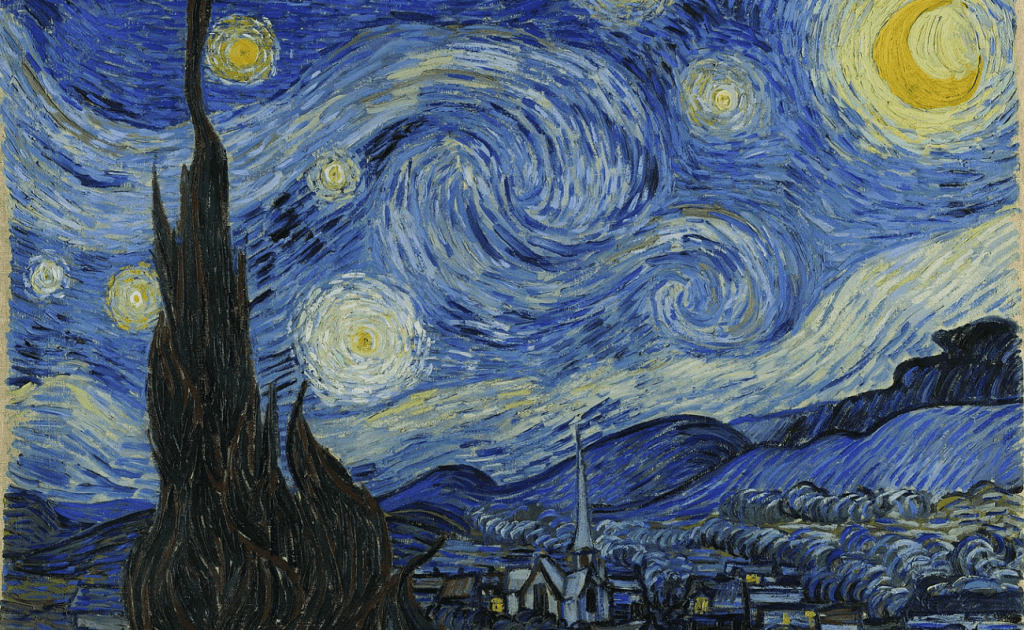
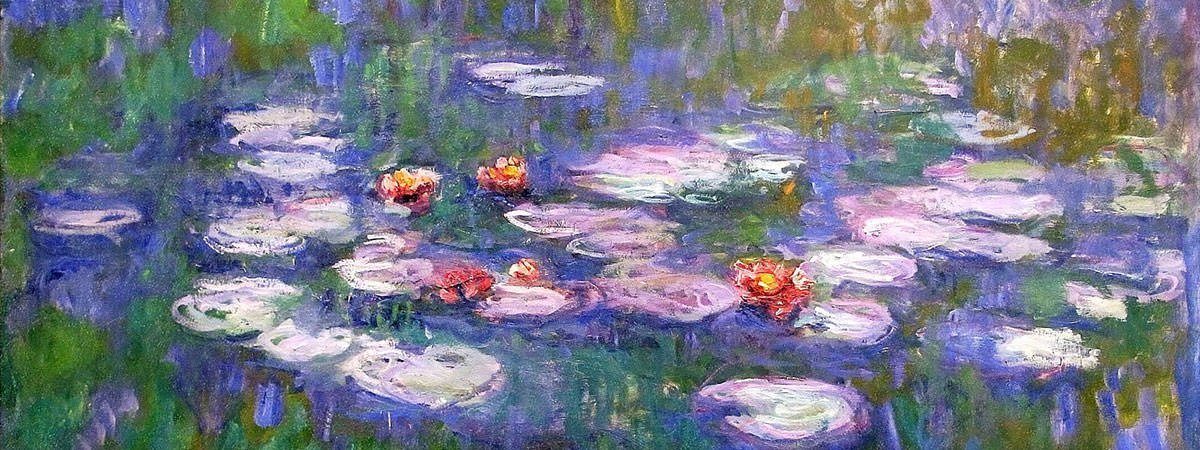
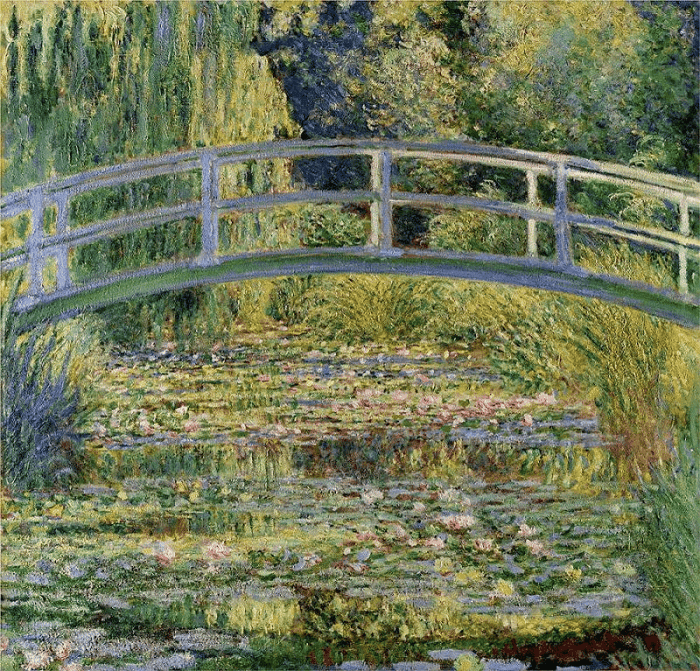
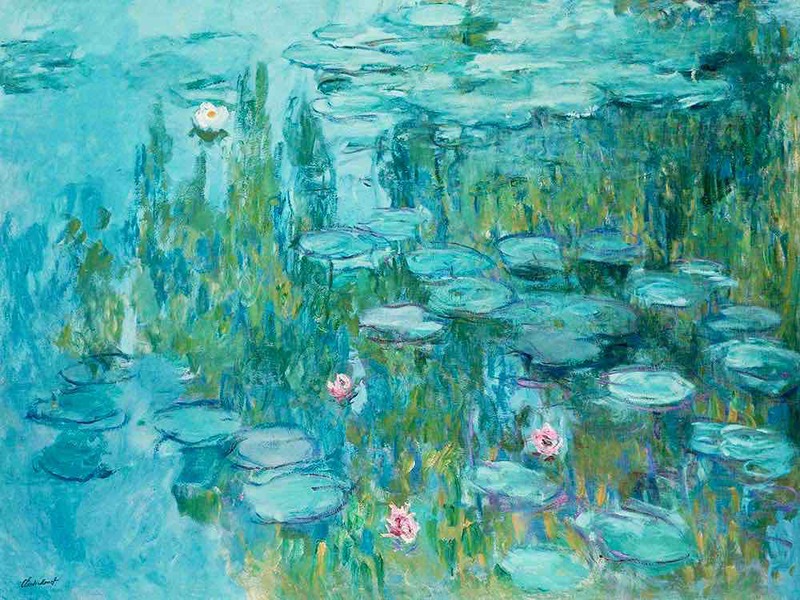

The impressionism movement of the 19th century is quite famous, giving us works by such famous painters as Vincent Van Gogh and Claude Monet. It’s officially defined by Merriam-Webster as “a theory or practice in painting especially among French painters of about 1870 of depicting the natural appearances of objects by means of dabs or strokes of primary unmixed colors in order to simulate actual reflected light.“
In other words, looking at the paintings above, impressionism is the opposite of hyper-realism. It’s using simple strokes, unmixed colors, and globs or dabs to create the impression of an object or scene, rather than attempting to capture it like a photograph with micro-details and perfect pigment mixes.
Cool. What does this have to do with poetry again?
Saige helpfully explained that a lot of poetry is like an impressionist painting, only in the form of words. Some poems may seem nonsensical or fragmented, and this is intentional. Take the poem in Machete by Morin titled “A Sigh”. Morin describes himself being in a dark forest, but he does so in a way that gives us simple, bold impressions of that forest and how he feels inside of it.
“…I wandered upon a dark wood a gloomy wood
a gloomy wood a wood so drear
a forest dark a darkling wood within
wood obscure gloomy wood…”
from “A Sigh” By Tomas Q Morin, p. 22 (ebook), 2021
At face value, this poem seems very strange and simplistic. Just a bunch of phrases repeated and tons of occurrences of the word “wood”.
But look at it again and imagine each word or phrase as an element of an impressionist painting, as if each word represents a section of that painting, like a paint-by-number, almost. Don’t focus on each word in turn- unfocus your brain’s eyes and let just the vibes fall over you.
Does that make any sense? I know it hurt my brain to wrap around when Saige first explained it to me, but she said something that actually really helped. She told me not to try too hard to understand the words, just to digest them via the feeling they create in me.
Saige’s comparison of poetry to various art movements really helped to make some things click in my head. I love impressionism (my favorite art movement aside from surrealism), and it actually made me much more interested in poetry to discover that it’s basically a verbal equivalent.
Phase Two: Reading About Writing Poetry
The next stop in my road to understanding poetry was an eBook I got from Libby.
Write A Poem, Save Your Life by Meredith Heller (2021)
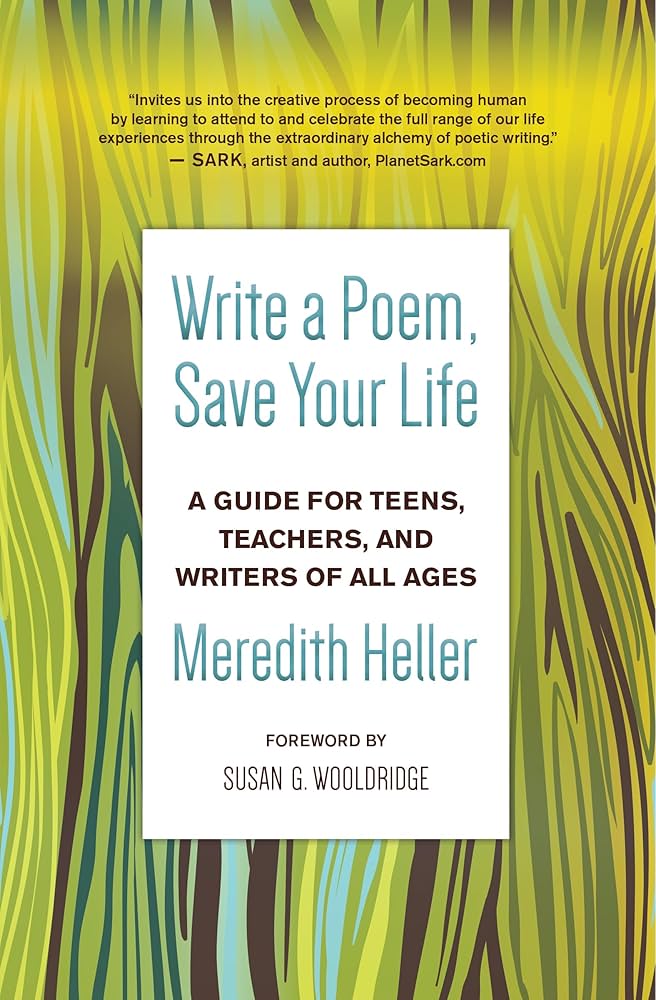
After I’d exhausted my brain muscles reading and attempting to digest Machete, I turned to some more academic instruction. I left the field and entered the classroom.
The big takeaway that really stuck with me from this book was this phrase: Flesh It Out or Boil It Down. In other words, a great poem can be either very specifically and intricately detailed, describing each visual down to the blade of grass, or it can be as simple as caveman speak, and both pieces are equally affective due to their detail or specific lack thereof. Heller advises that when we write a piece, consider doing one of those two things: add vivid detail and descriptions, or cut away all the chaff and leave only the bare bones. I found this fascinating, and it made me really want to try it out myself.
I did like some of the prompts in here, but I feel like a lot of them were geared toward a younger audience. Many of them requested me to turn inward, which isn’t exactly my ideal way of learning how to write poetry. I found myself wanting to paint vivid pictures like Morin, not reflect on my inner child and what parts of it aren’t healed. A little too heavy for me.
This was when I realized something. I didn’t learn how to write stories from reading books about writing stories. I learned from reading stories and absorbing them.
Time to read more poetry!
Phase Three: Immersion
Note: these books were not recommended to me by Saige; rather, I picked them at random from the “poetry” filter on Libby.
I Hope You Remember by Josie Balka (2025)

This made me feel a whole lot better about what I tried to write at the beginning of this. Balka’s poetry is very conversational and tied to emotion, which is much closer to what I’ve been writing than most of the stuff I saw in Machete. I guess one thing I do need to keep in mind is that poetry, like art, is subjective. Some people love modern art but don’t care for cubism, while others like anything that has nice colors.
I don’t know anything about the poet, but Balka’s poems were both effective and easy to digest. Several of them actually made me tear up, and I found a lot to relate to in her experiences.
(At this point in my pursuit of understanding poetry I found myself randomly wondering why I haven’t heard of any modern horror poetry, so I tried writing some myself. The jury is still out on if it’s any good, but it didn’t exactly help my current situation, as I can’t use it for the project. Oh well.)
The Sun and Her Flowers by Rupi Kaur (2017)

I think it’s safe to assume you know who this chick is. If anything, you’ve seen the cover of Milk and Honey before on the shelves at Target. Kaur is a clearly successful mainstream poet, so I figured I should probably check her out.
I found that her poems are the most similar to mine I’ve found so far. NOT in terms of quality; I am not delusional about that (other things, maybe). But in terms of construction, length, and rhythm. My most recent attempts consist of quite short lines and many breaks for emphasis. I also have a weird tendency to create patterns (starting each section with the same few lines, modeling each section structurally after one another, etc), and while this isn’t a constant element of Kaur’s poems, I did see it done a few times. It was at this point that I figured I should probably read the entire collection and absorb it.
Not only did I see some of my own preferred patterns in Kaur’s work, I again found myself relating quite directly with many of the sections. In the second section, Kaur discusses body image at length, expressing the ideas that have always circled my brain on the subject as well. I think this is why this kind of poetry is so popular currently- we’re relating to it much more than we would an older poem about walking in the woods.
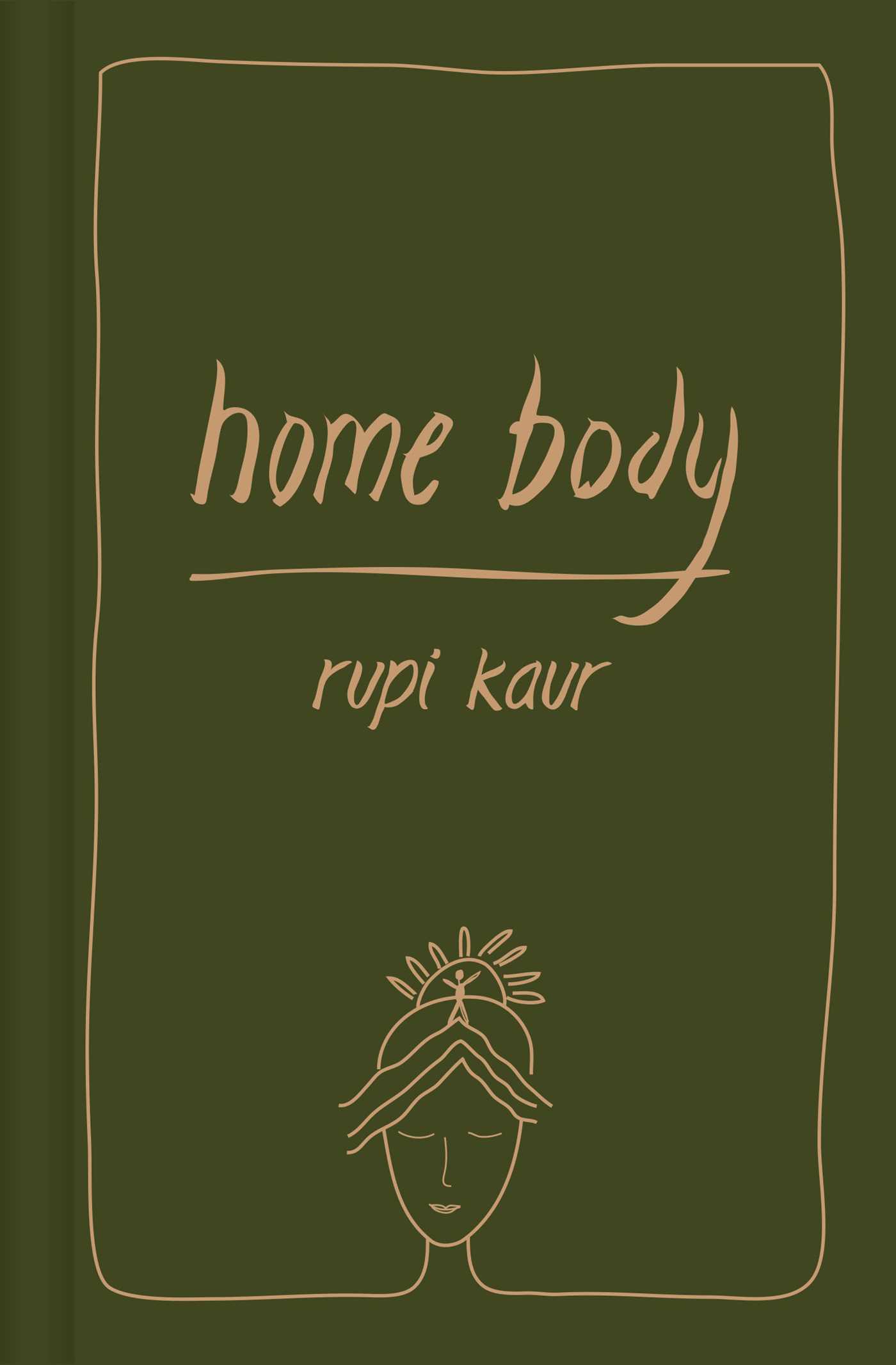

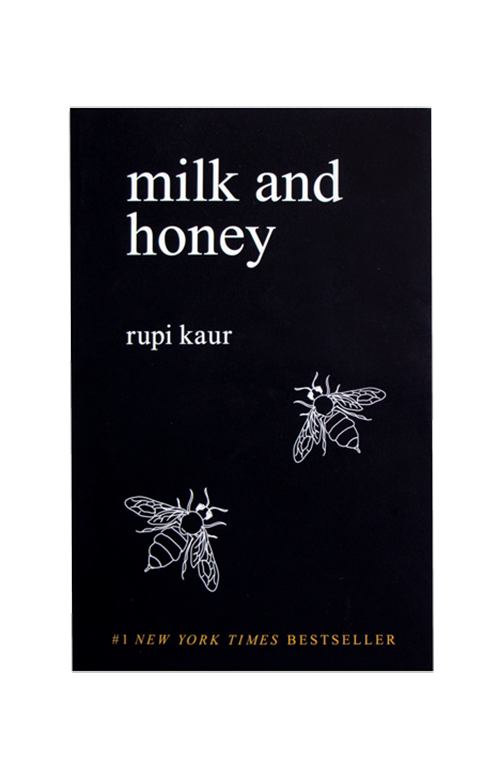
I ended up eating this entire thing up and now consider myself a fan of Kaur. She might be considered commercial to poetry fans (her books are for sale at Target), but her poems, to me, were poignant, effective, and engaging.
Phase Four: Practice Makes Slightly Less Terrible
My education on the subject came to a climax when Saige offered to give me a lesson. That’s right- an actual educational-style lesson complete with PowerPoint slides. Turns out one of her projects in college was to come up with an entire unit teaching a facet of poetry, and of course she kept everything. Lucky me!
Here’s what’s cool. Remember up there where I mentioned trying my hand at horror poetry? Well, I shared it with Saige just for fun, and she told me that I accidentally did something called ekphrasis.
Ekphrasis is defined by Merriam-Webster as “a literary description of or a commentary on a visual work of art”.
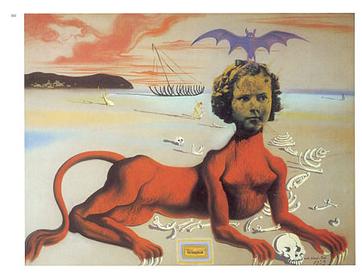
What did I do? Well, when thinking of a subject for a horror poem, I thought of what scared me, and I thought about what Saige said about poems as paintings. It’s not hard to imagine that I ended up thinking of Salvador Dali’s The Elephants. It’s one of my favorite art pieces of all time, and Dali himself is tied for my favorite artist with Van Gogh (I don’t think this is a very uncommon sentiment). And The Elephants has always creeped me out. The impossibly long legs, the vast landscape, the angry reds in the sky- it’s very eerie.

So I wrote a poem set inside the painting from the point of view of someone whose identity has been erased except for bits of memories. They watch the gargantuan elephants approach slowly on the plain, and desperately try to hang onto themselves as a living person.
Yeah, it’s pretty strange. And still not anything I’d consider actually “good”, but it was the most fun I’ve had composing a poem so far. And after my lesson with Saige and finding out I was actually doing a real poetry style, I plan on exploring it much more in my own work.
But that doesn’t help me too much with our secret project. So Saige gave me a few pointers for that specifically.
She told me about enjambment, which is defined by M-W as “the running over of a sentence from one verse or couplet into another so that closely related words fall in different lines”. An example:
The feeble young bird sings
a melody of famishment to its mother
Lilting, fluting notes that whistle
of growth and change
I just pulled this out of my ass as an example, but you can see where I purposely broke the lines in the middle of the phrase where I’ve put the words in bold. Enjambment creates rhythm and draws attention to specific phrases, often making the reader go back and re-read lines to gather the full picture. I’ve cut each line in a specific place, isolating phrases that, on their own, still give a complete impression: the baby bird sings. That’s an entire impression even without the continuation below. Same with the second set of lines.
I have been seeing the use of enjambment in almost all of the poetry I’ve checked out for this project without even knowing it. It’s quite common in Rupi Kaur’s style. It’s a fantastic way to create rhythm and make the reader stop and digest a little bit more.
I plan on using this in my own future attempts. Saige also recommended, specific to my struggle of writing poetry from a fictional character’s POV, to consider every emotion my character feels throughout the narrative, and to try writing poems for the ones that stick out to me. She also advised me to try peppering in strong, startling or unexpected verbs to make readers do a double take and get a stronger impression of the action I’m trying to convey.
Alright, so how the hell do you write poetry?
I’m going to say something you may not like.
Art is subjective. Paintings, sculptures, music, movies, books, and poetry are seen in so many different ways- genre, tropes, movements, styles, and mechanics. So, while people may say there’s good and bad art, they’re really lying. What they mean to say is, there’s art I like and art I don’t like.

Some people only read romance novels because that’s the genre that appeals to them. Some prefer electropop music, and others hate anything that isn’t horribly complex and avant-garde. Even within genre and a specific artist’s fanbase, there are contradictory opinions. I’m a big Muse fan, and my favorite album of theirs is frequently cited as other fans’ least favorite.
My point is, there is no actual good and bad in art. There is only the art that speaks to us individuals. And this absolutely applies to poetry.
However, there are several ways you can make your poetry more emphatic, strong, relatable, and vivid to readers. Here is a summary of the things I now have in my toolbox after all this:
- impressionism– using short words or phrases to create the impression or shape of a subject
- Flesh It Out or Boil It Down– using either large amounts of very specific detail or trimming all descriptors and expressing the idea with the barest of words as possible
- ekphrasis– using words to describe or comment on a work of visual art
- enjambment– purposely cutting phrases into separate lines or stanzas to create rhythm and draw attention
So how do you write poetry? If I’m being a shit, however you want. If I’m trying to answer my own question, by finding and using techniques and methods that appeal to you, and by reading poetry that you enjoy.
If you’re interested in writing your own poetry, I hope some of this either helped you or at least gave you a jumping off point for your own research.
Stay tuned for further developments with me and Saige’s secret co-writing project!
Monthly Writing Goals Update
3,782 / 20,000 words
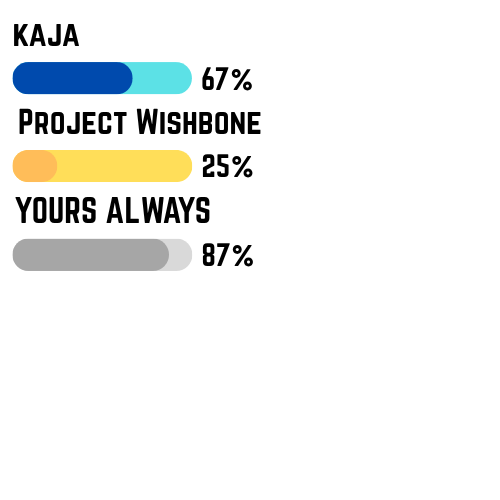
I’ve made a big decision this week.
I’ve decided I’m going to commit to self-publishing Kaja this fall.
I will be waiting until we are much closer to the tentative release date (right now I’m thinking September 1st) to make an official announcement, but you guys are the ground floor, so you get this stuff way before anyone else. But I realized that the best way to build an audience is to keep them coming back with frequent releases. And I’ve read that a lot of self-pub authors make the mistake of letting the momentum drop after their first release. Once people start reading Losing Air, they’re (hopefully) going to want more from me, and I want to be able to point them toward something. In this case, it’ll be the release of Kaja.
While it’s not yet fully drafted, I have the entire thing ready to go in my outlines. That’s the hard part for me, writing it is what’s easy. And I did some math the other day. Check this out.
Assuming Kaja ends up being 30,000 words like I’m estimating, if I write 1,000 words in it every weekday, I will finish in about one month (around the first week of May).
1,000 words is a light day for me, easily doable. And I estimate I’ll probably go over that several times, so that can cover the odd day I miss. So I’m committing myself to a second goal as of now: writing at least 1,000 words in Kaja every weekday.
That will give me more than enough time to finish drafting, go through line edits and revisions with my (dad) editor, and finalize formatting and art direction before September.
I’m also planning on publishing the physical version through IngramSpark this time instead of KDP, because 1. Amazon sucks and is evil 2. Indie bookshops apparently can’t get Losing Air even though I selected “expanded distribution” 3. Amazon completely fucked up big time when Losing Air came out, sending the OLD version of the paperback to customers instead of the current version. Seriously. Thankfully only my parents had ordered the physical by the time we noticed, but geeze, dude. What if an actual reader had ordered my book and gotten this shitty version with formatting issues and typos? I will never trust them again, and I want my local indie shops to be able to stock my shit, so IngramSpark it is. Hopefully they don’t do me like that.
Correction 4/8: I’ve just been informed that Losing Air is now officially available for sale through Bookshop.org! I’ll drop the link, but please be aware that I haven’t been able to verify that Amazon is printing the correct version of the book yet.
With this new goal, I won’t be expecting too much progress with other projects for about a month. As you’ve probably noticed up above, I’ve trimmed down the active projects to just the ones I’ve put words into in the last two months. Fret not: Stasis and Malthea are not going anywhere. They’re just simmering while we get Kaja ready to go.
This content was written and created by a human, without the use of any artificial intelligence tools. The authors do not authorize this article’s usage in training AI tools. We proudly support the original works of creators and individuals over technology that steals and manipulates original content without consent of creators.

 Pen and Sword Blog
Leave a comment