
A while ago in our book club, we did a themed round where we all picked books that were inspired by fairy tales. It was fun to see the differences in the books we each picked, and we enjoyed comparing the books to their original sources.
Over the next few months, I noticed that a surprising number of books I was reading, both for book club and for personal reading, were also based on fairy tales! So much so, that when I reached seven of these such books, I knew I had to talk about it. So here are those original three intentional reads, plus those that were happy coincidences in this fairy tale compilation, and my thoughts on what makes them stand out, what makes some better than others, and the differences between an adaptation, an expansion, and a loose interpretation.
Spoiler info here! I won’t be outright spoiling the major events of the book, but rather talking about the ties to the fairy tale and the major concepts that they may share/lack. If there is to be a major plot spoiler, I will disclaim it below!
Cinder – Cinderella

Cinder was actually a book I read in middle school and really enjoyed. It’s a unique retelling of Cinderella, taking place in a futuristic, cyber punk, science fiction version of our world. The setting is New Beijing, and the main character is Cinder, a cyborg girl who desires freedom from her family and falls for a prince. It’s actually really good.
There are some great ties to the original fairy tale, such as Cinder repairing an old pumpkin colored car that takes her to the castle, her synthetic leg getting lost as she flees the ball, and a wicked stepmother who resents that Cinder lives and her husband does not. But this book also has its fair share of original elements, like an evil queen from the moon who wants to rule earth as well, a deadly plague sweeping the world, and futuristic robots and cybernetic advancements.
I would firmly call this book an adaptation, due to the key story beats and symbols that appear within it. That’s not to say that this book is copy and paste, but rather it takes the OG and explores it as something new.
I also know that this is just the first book in the Lunar Chronicles series, which I actually haven’t read. But I know the other books are adaptations as well, being based on Little Red Riding Hood, Rapunzel, and Snow White. I can’t attest to how well they hold up, but I do recommend checking out Cinder.
The School For Good and Evil – Various Tales
I also read this book in middle school, and this was my pick for book club. rather than being a strict retelling of any specific book, this series combines much of the tales we know and love into one world, where all the fairy tale heroes and villains once attended the titular school for good and evil.
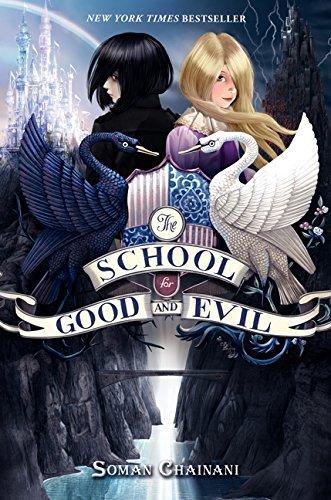
The main characters are ordinary girls thrust into the world that they only knew from story books, where they encounter students who are children of heroes and villains, such as King Arthur’s son, as well as teachers who have played roles as well, like Cinderella’s fairy godmother.
Rather than strictly retelling the tales, the book exists in the world of them, where there is a constant battle between good and evil being represented in these stories. The main duo needs to figure out where they fit in, and if they’re doomed to be just another story.
The book itself is pretty good. It’s fun, not that complicated, and is pretty enjoyable. I have some issues with the series at large, but I can save that for another day. This book is stuck between an interpretation and an expansion, since it builds a larger, interconnected world, but doesn’t follow the exact plot of any of the original fairy tales.
Fairy Tale – Various Tales
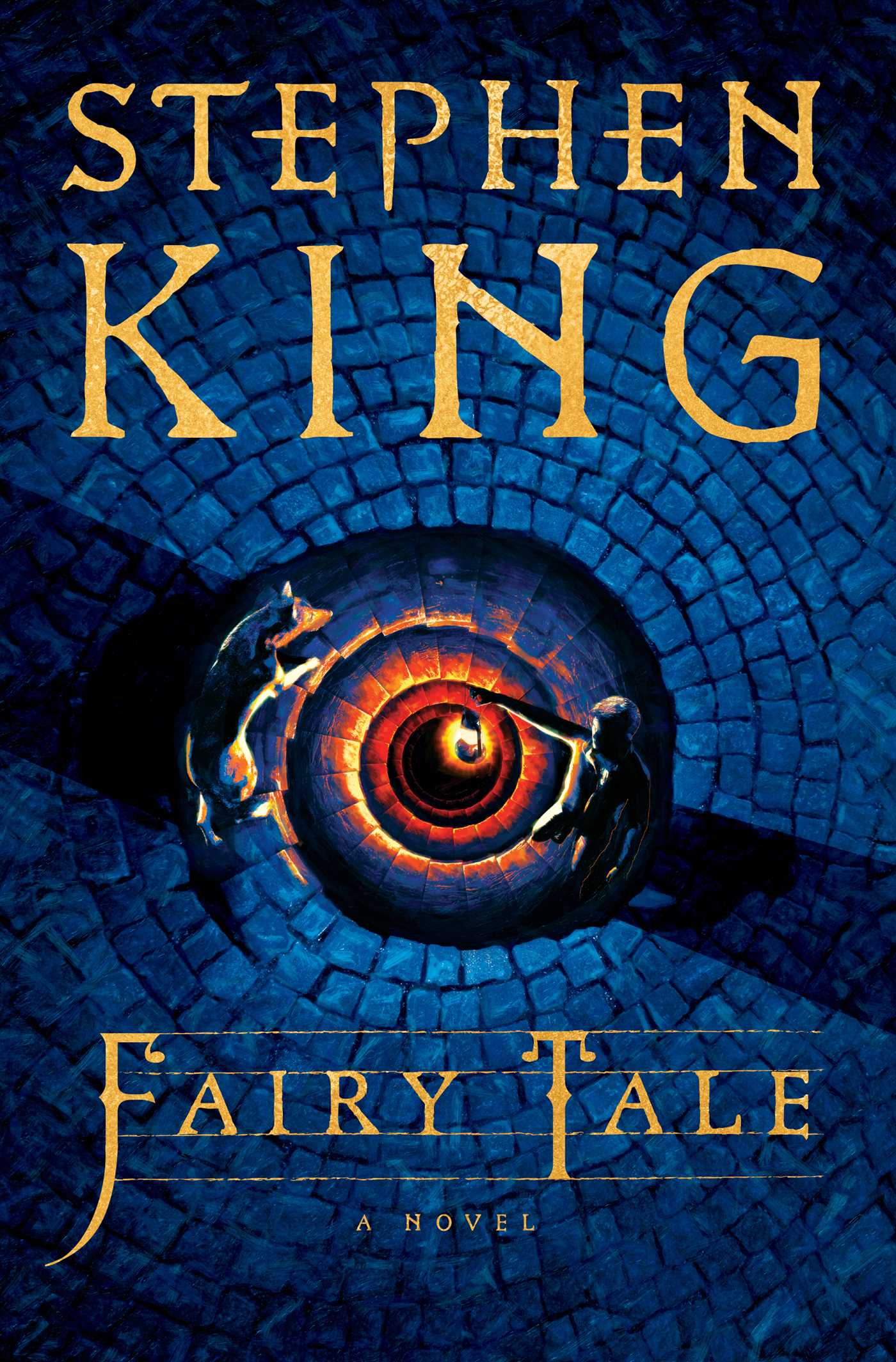
This book is GOOD. And very unique, which is saying something for Stephen King. This is the most fantasy I’ve experienced from him, and he does it well. I’m gonna spoil right away what kind of book this is and let you know that this is a loose interpretation. It may actually best be described as its own fairy tale, featuring references to many fantastic tales and adventures.
The book follows Charlie, a normal American boy who saves an elderly man after he falls down, after the man’s dog, Radar, gets his attention. This starts a relationship between the three, as Charlie becomes Mr. Bowditch’s caretaker. They both share their love for Radar, who is aging herself. Charlie knows that Mr. Bowditch has some secrets, but doesn’t pry.
When Mr. Bowditch passes, he tells Charlie that in his shed is a well that contains a staircase that leads to another world, where magical and mysterious things happen. In this world, there is a sun dial, which can restore life to Radar if she’s placed upon it. Charlie, not able to lose both of his friends, embarks on a journey to give his beloved dog a few more years of life.
Besides tugging at your heart strings, this book contains TONS of references to both specific fairy tales, as well as larger fairy tale concepts. The Wizard of Oz, while not strictly a traditional fairy tale, is frequently mentioned. There are other allusions, like a character being likened to Rumpelstiltskin, the rule of three being seen, and concepts like princes and rulers and heroes explored. There are references to trolls, Rapunzel, porridge, manners, and even more. The main fairy tale referenced is lesser known: the tale of the goose girl, a girl who is cursed to lose her voice but it aided by her horse Falada. I wasn’t aware of this tale when I was reading the book (more on that later), but a lot of the elements were easy enough to see. There are also dark forces and even eldritch references here that play the role of evil, giving some Lovecraftian vibes that somehow fit in with the fantasy elements.
This book may not fully be a Fairy Tale, but it’s a heroes journey that plays with fairy tale troupes and references in a really great way. If you want a story you haven’t seen before, but still love stories that are fantastical, magic, and dark at times, read this book!
(And if you want a more in-depth look at the fairy tale elements, check this great article out!)
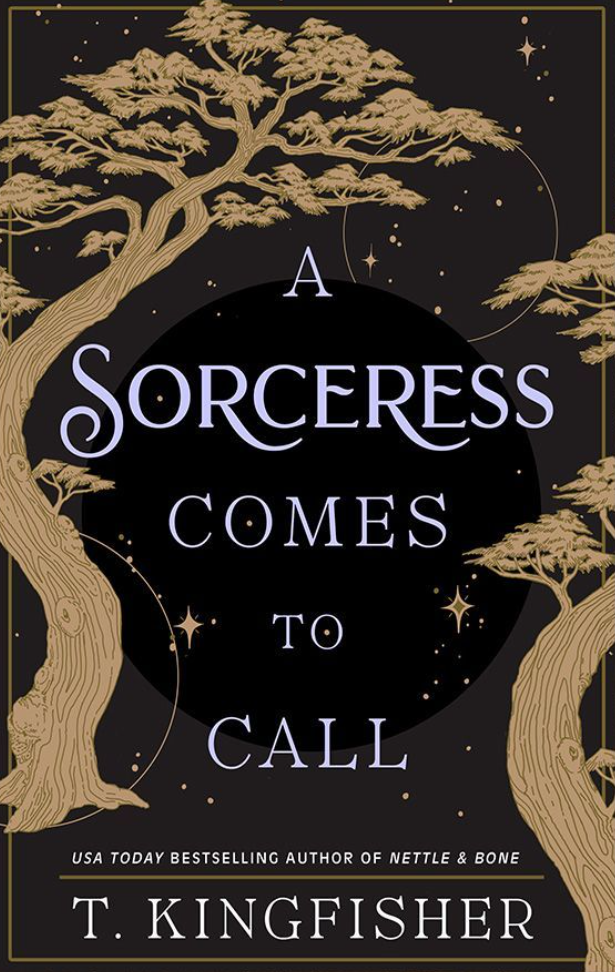
A Sorceress Comes to Call – Goose Girl
So remember how I just mentioned that I didn’t know about the goose girl fairy tale? Imagine my surprise when, a few books after Fairy Tale, I picked up A Sorceress Comes to Call, which features a magical horse named Falada and a girl who is sometimes cursed so she can’t talk! I had rushed to Olivia and Ava to tell them the word, and then happily enjoyed this book.
For those who don’t know, the original fairy tale tells of a princess who is sent to marry a prince. She is threatened by the maid who accompanies her, who then takes her place. The maid marries the prince, and the princess becomes a lowly goose girl. The talking horse Falada is killed, but his head still speaks to her and comforts her. Sworn to not tell what happens, the goose girl tends the geese until suspicion grows and it’s revealed that the two were swapped. The princess gets to marry the prince, and the maid is dragged through town, naked in a barrel of spikes. Fun!
So this version is a bit different. Cordelia is the daughter of a sorceress, Evangeline, who is determined to gain wealth and prosperity for herself. She’s a classic narcissistic mother, who uses her magic to manipulate people to get what she wants. One of these ways is by controlling Cordelia, trapping her in her mind while her mother dances and talks for her to woo guests and strangers. Evangeline sets her sights on a wealthy squire, and enchants him to get closer to him. She can’t make him fall in love with her outright, but she can influence him and charm him just the same.
Cordelia knows the truth of what her mother is doing, but is helpless to do it herself. She is constantly watched by her mother, or by her mother’s horse, Falada. But Cordelia becomes acquainted with Hester, the squire’s older, unwed sister, who is suspicious of Evangeline. They must figure out how to overcome Evangeline’s sorcery in order to save the squire and Cordelia from her sinister, selfish clutches.
I’d call this one an adaptation. There are some differences from the original story, and Cordelia doesn’t do to much with geese in this book, but we have the main concept of a girl who is forced into silence by someone desiring power. Honestly, if I hadn’t read Fairy Tale before and was clued in by the matching name of Falada, I may not have known about the origins of this one. The book itself is pretty good, I think I gave it four stars, so do check this one out if you think it sounds interesting, and maybe even go read up on the original fairy tale!
Upon a Starlit Tide – Cinderella/Little Mermaid

I love mermaid books. I’ve read many. I have many on my TBR. I’ll probably do a whole article on mermaid books one day. But suffice it to say, I’m a fan. I was so excited to read this book, and it didn’t disappoint! It’s a mostly original story, I’d say, with elements from both Cinderella and The Little Mermaid present.
The main character is a girl named Luce, who is the adopted (and favorite) daughter of a ship merchant. Early on in the book, she saves a man from drowning after his ship sinks. He kisses her when he awakes, and they’re mutually charmed by one another.
Luce strongly desires the freedom to captain one of her father’s ships, but he’s insistent that she stays with him. Not only for her protection, but also because she has difficulty with walking due to leg injuries she received as a child. When they discover that the man she saved is Morgan , the son of a very wealthy ship-owner, they are encouraged to see one another. If Luce marries Morgan, perhaps she can accompany him on one of her father’s ships and achieve her dream. And Morgan is in need of a new ship after his sank. It seems mutually beneficial.
The closer she gets to Morgan, the less seems right. Luce discovers secrets about him, herself, and her father, which lead her to the truth of her own identity, that she was a mermaid who was stolen by her ‘father’, and stuck in human form when he hid away the sea silk that lets her transform. It’s also apparent that Morgan suspects her real identity, and may only want her for the luck she can bring him.
I won’t spoil too much more of the plot, but there’s a pretty good romance, more mysteries unlocked, and a wonderful journey of self discovery for Luce. I’d call this an adaptation/expansion. The story is mostly unique, as I said, but there are tons of elements from the original stories that shine through, like Luce’s sisters destroying her dress before a ball, but she is magically gifted a gown, a slipper left behind at said ball, Luce’s feet aching as she walks, like in the original Hans Christian Anderson story, and even more. This may be my favorite of the books on this list, I cannot recommend it enough.
In the Lives of Puppets – Pinocchio
So Ava picked this book club book for our LGBTQ+ round last year, and despite having read it, she had NO idea it was Pinocchio-inspired. Even though it quotes it. And references it. And is the biggest piece of puppet based media like, ever. Don’t worry, I teased her relentlessly for it.

This book is about Vic, the only human boy left in the world. He was adopted and raised by Giovanni, a humanoid robot who lives mostly isolated in the woods. He raised Vic to be an inventor, like him. The two live with Rambo, a sentient vacuum robot, and nurse Rached, a slightly insane repurposed nurse robot.
When they stumble upon HAP, another humanoid robot, secrets from Gio’s past are revealed. Vic learns that Gio created the HAP line of robots, who were made specifically to hunt robots. Luckily for the group, they are able to repair and reform Hap, teaching him about humanity and what it’s like to be free from the orders he once had. That is until Gio is taken by the evil robot government, and the party needs to go get him back.
This book leans more to the side of loose interpretation. Hap is the Pinocchio style character, since they spend much of the book teaching him how to be a boy. They search for a being called the Blue Fairy, who can help them find Gio, they travel in a flying vessel named the whale, are trapped in a strange circus, and even call Hap ‘Hysterically Angry Puppet’.
There is a lot of heart in this book. Good queer rep, including a well written ace character, and a lot of humor and joy. Even if you don’t know too much about Pinocchio like Ava, this is still well worth the read. And if you do know your puppet lore, the references are delightful to find.
Heartless – Alice in Wonderland
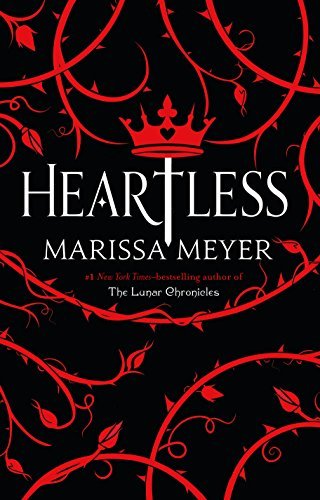
This was our most recent book club read, where we read new books by authors we had already read from. How poetic that both the first and last book on this list are fairy tale novels by Marissa Meyer! Heartless is an Alice in Wonderland themed novel, taking place in Wonderland, featuring many of the same whimsical characters, but stars two new additions to the cast: Catherine, a noble daughter, and Jest, the King of Hearts’s new joker.
Cath, more than anything, wants to own her own bakery, but when the King of Hearts expresses interest in courting her, her plans all go awry. Not to mention, she’s quickly falling for Jest, enjoying his humor and the reprise he gives her from her life as a noble girl.
As you read, you get to enjoy the references to the original Wonderland, but you’re left wondering where it fits into the story. There’s no reference to Alice, and Cath and Jest don’t exist in the original or the classic Disney film. So how does it connect? Is it an interpretation, expansion, or adaptation?
Here is where the big spoilers come in. Here is your warning! So Jest is killed. Cath is heart broken. A lot of her internal frustrations and anger begin to bubble out. She decides to get revenge on Jest’s killer, and she does this by accepting the king’s proposal, thus making her the queen of hearts. She orders the beheading of the killer, cementing her firmly in place as the soon-to-be antagonist of Alice’s upcoming adventure.
So this is pretty firmly an expansion, and one I wasn’t expecting. I got excited when I connected the dots and it finally hit that Cath was becoming the villain. I enjoy villain origin stories, and really liked the twist that this book was one. Even for those like Ava, who had no knowledge of wonderland (sound familiar?), the book holds up well and is a nice exploration of the whimsical world. I would love some more novelizations of classic fairy tale villain origin stories, so I need to do some digging.
And there we have it! Seven fairy tale stories categorized pretty neatly. I really enjoyed writing this article and breaking down what I felt were the main types of adaptation. And I’m looking forward to continuing with my distinctions, should I read more books of this genre in the future!
I hope you all enjoyed, and hopefully found a new book or to that you can add to the never ending TBR. Thanks as always for sticking around.
This content was written and created by a human, without the use of any artificial intelligence tools. The authors do not authorize this article’s usage in training AI tools. We proudly support the original works of creators and individuals over technology that steals and manipulates original content without consent of creators.


 Pen and Sword Blog
Leave a reply to Genre-Fluid Heroes – Pen and Sword Blog Cancel reply