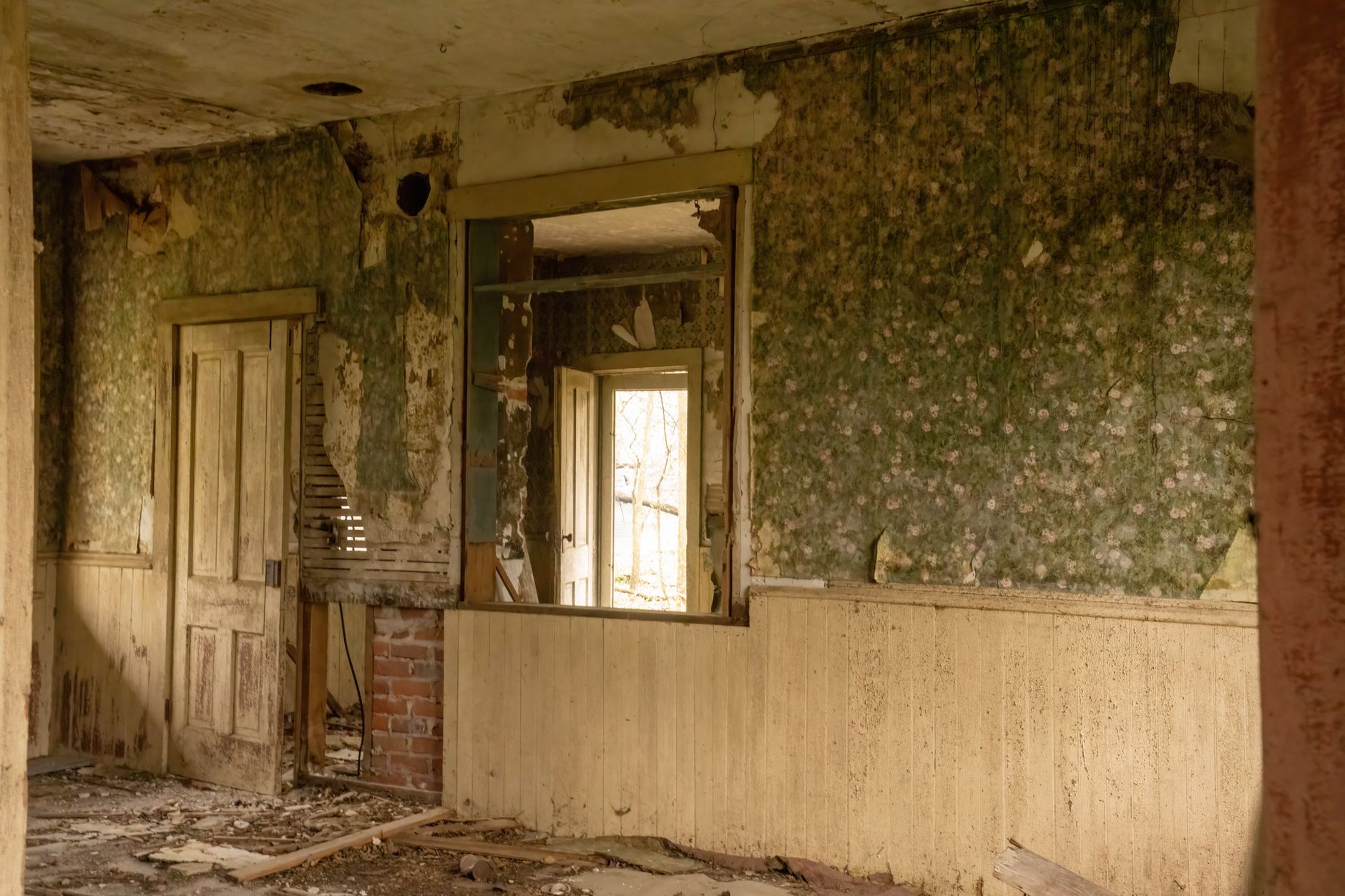

There are some names that you can’t escape when discussing the horror genre: HP Lovecraft, Edgar Allan Poe, Henry James, Mary Shelley, etc. Many consider writers like these to be the “founding fathers” of horror literature. And, as all students enrolled in US schools have to learn about the founding of the country, it only tracks that a horror literature enthusiast (and writer) should want to be familiar with the founding of the genre.


Confession time: As of about December last year, the only thing I’d ever read that could be considered a founding work was that one time we had to read The Telltale Heart in high school, and I understood none of it. I mean, I was like sixteen, so I guess I get a pass for the supposed genius of the work going over my head.
Now, before you start to yell at me, I have since started to delve into some older works for various reasons.
I follow along with the Doof! Media podcast Flanagan’s Wake, examining the entire works of my favorite director, Mike Flanagan. Not only do they watch and discuss his visual works, but they also read any material cited as inspiration for those works.
For example, they read Shirley Jackson’s The Haunting of Hill House in preparation for Flanagan’s legendary show of the same name. So, as I followed along, we reached the beginning of their examination of The Haunting of Bly Manor, which pulls inspiration from several works of Henry James, most notably The Turn of the Screw. As a result, I found myself reading this work for the first time. I knew it was one of the classics, having heard about the work in horror circles for years. But I’d never actually read it until then. I’ll save my thoughts on it for the below section.
Also, in December last year, I found myself curious about the works of Lovecraft. He’s often cited as one of Stephen King’s inspirations, and I’m generally familiar with the “Lovecraftian” style of horror emulated today- The Ballad of Black Tom, Stephen King’s Fairy Tale, etc. But I’d never actually read any original Lovecraft. So, I spent some time with his more famous works: The Dunwich Horror, The Rats in the Walls, and I started but didn’t finish The Call of Cthulu.
All this to say, I’ve been trying to complete my patchy education in the origins of the horror genre for a few months now. And while I certainly don’t believe that a horror enthusiast or writer has to have read a bunch of these founding works to be considered a “real” fan, I personally wanted to examine the beginnings of this genre I love so much and see how those styles and conceits are still being explored in modern horror.
I’ll be rating these works based on both general enjoyment and readability (some of these older works can be very dense and hard to parse for my squishy modern-age brain).
The Rats in the Walls by HP Lovecraft (1924)

A man moves into his family’s sprawling estate only to be troubled by worrisome occurrences.
My Thoughts
Rating: 4/5
Readability: 4/5
When I finished this story back in December, I made a Threads post that nobody liked:
“Reading The Rats in the Walls for the first time and picking my new life goal: living in a half-decrepit estate in Europe with my 9 cats where all the locals think my family is cursed so they leave me alone”
Is it odd that I found the first half of the story to be unexpectedly cozy? Man’s just trying to repair this sick-ass castle with his cats. Sounds like a dream to me.
It was also just written like your good ol’ classic spooky house story. I found comfort and familiarity in that premise while being able to admire the things that made the work Lovecraftian: the endless hellscape impossibly hidden beneath the castle and how our character was damaged by seeing it.
It really wasn’t too long, and I didn’t find myself struggling overmuch with the language. I recommend this to anyone wanting to check out what this guy’s all about. Note: I also read The Dunwich Horror, and while it’s longer, I thought it was a little more disturbing than this one, so I recommend that one as well.
Influences on Modern Horror
The thing that this story immediately reminded me of was Stephen King’s short-story prequel to ‘Salem’s Lot titled Jerusalem’s Lot, found in Night Shift.

Not only does it make some pretty clear direct references to Lovecraft’s story, but it’s very similar in vibes and elements- we have a man moving into an old estate and experiencing strange things. In Jerusalem’s Lot, instead of a foray into the lower sanctums of the castle, we have our main character explore an abandoned Puritan town called Jerusalem’s Lot, which features a creepy Necronomicon-style book in a church with inverted crosses that seems to awaken some unholy Leviathan.
To mention King again (which makes sense, he’s professed to take much inspiration from Lovecraft), we also see a very similar set piece to the winding stairs leading down to the depths of the keep in Fairy Tale two separate times. I won’t spoil it for you, but Charlie comes across several old, winding staircases leading to disturbing or otherworldly things.
I also see some influence here on House of Leaves, which centers around a house with a.) more interior area than it should have and b.) a very, very long spiral staircase that leads into nothing good.
The Turn of the Screw by Henry James (1898)

A governess lands a dream job in the English countryside tutoring two children, but she is haunted by visions of a strange man nobody else seems to see.
My Thoughts
Rating: 3/5
Readability: 1/5
This one was a little painful. If I hadn’t been armed with foreknowledge from Bly Manor and an informative analysis from Scott and Matt at Flanagan’s Wake, I would probably have just cried and given up.
Firstly, it’s a story being told by somebody who wasn’t there but heard the story from someone who was, and the first ten pages or so is just this guy talking about how he needs to go get the manuscript containing the story so he can tell the story.
*inhale*
Yeah. Once the actual story starts, it’s not like it’s bad or anything, there’s just a lot of dense language and sentences that go on at least as long as the one I just typed up there, usually twice that. I was able to parse from every other sentence or so (plus from Matt & Scott’s discussion) that the genius of this story comes from the uncertainty of it all: was the governess actually seeing ghosts, or was she insane? Was there actually anything strange about Miles, or was he just a little odd for a kid his age? These questions are never definitively answered. We’re only given the information the governess had, which could have been wrong. This may have been one of the first occurrences of the beloved “unreliable narrator” trope so common in modern horror. So that’s pretty cool to see and pick apart.
However, without several aids, I wouldn’t have been able to get through this story on my own. I’m glad I have experienced it, but I’m certainly not going to be making a habit of further Henry James reading.
Influences on Modern Horror
There are simply too many to name. Not only has this work been adapted about a thousand times (somehow all I’ve managed to see is Bly Manor), but the big sprawling haunted manor with creepy children is still done today at least once a year.
In terms of the unreliable narrator, this is also seen numerous enough times that I can’t even begin to name them all, but my favorite occurrence of it is found in Shirley Jackson’s The Haunting of Hill House.
The Yellow Wallpaper by Charlotte Perkins Gilman (1892)

A woman deemed to be in ailing health is moved to a country manor to recover, but the room in which she spends most of her time begins to unnerve her.
My Thoughts
Rating: 4/5
Readability: 4/5
I was pleasantly surprised to struggle very little with the language in this one. The story is interesting from the beginning, not meandering at all and getting straight to the plot. We view the entire unfolding of events from the main character’s perspective, which, most of the time, is limited to her bedroom. As many have discussed in much more enriching argument than I can summon, this is a fascinating early example of a feminist tale- the female main character is repeatedly gaslit, manipulated, and dismissed by the men responsible for her care. She is unnamed, adding even more to the point that this woman is being disregarded.
I enjoyed not only the feminist tones, but also just how eerie it was. The way the goings-on of the world outside the room are described as being so far away and separate despite being just a closed window away, the slow descent into psychosis as the confines of her room wear away at her, the finale where I’m still not exactly sure what happened- it’s all great.
It was also a fairly short read, easily doable in one night. I recommend checking it out, then reading some great discussions on its feminist elements. I enjoyed this one.
Influences on Modern Horror
For me, this one brought to mind two specific reads.


These books both contain very good examples of women being gaslit, dismissed, and/or manipulated to make them more easily-controlled to the men “responsible” for them. You Did Nothing Wrong has many fantastic and hard-hitting themes, and it’s also a Gothic tale- creepy big house, isolation, romance, all that jazz. Delicate Condition has one of the most tense narratives I’ve read, and while it’s clearly inspired by Rosemary’s Baby, I think it turned that idea into a riveting horror thriller.
The King in Yellow by Robert W Chambers (1895)

Several strange tales follow people affected by a fictitious play called “The King in Yellow”.
My Thoughts
Rating: 4/5
Readability: 3.5/5
My exact Goodreads review of this was as follows:
“I don’t really know what it is I just read, all I know is that there are a few images that will stay with me for a while.”
The very first story presented here took a good minute to get going, but once it did, I was hooked and quite creeped out. There’s something about the way these stories are written that just needled me (in a good way). From the idea of a “suicide room” set right on a busy street in New York to a pool in some rich guy’s house that turns living things into statues, these stories all found a way to creep me out without even trying. It should be noted that the edition I have doesn’t contain any of the poems at the end (described in the Wikipedia entry).
I was able to read it in an afternoon without too much trouble. Some of the stories seemed to meander a bit, but other than that, I was able to comprehend most of the images Chambers was trying to paint in my head.
Influences on Modern Horror

While it’s hard to pinpoint examples of this in modern works (given that these stories are so weird and unique), I did feel some Lovecraftian vibes while reading, and turns out that squishy brain of mine is a bit perceptive- Lovecraft apparently cited this work as something he read and enjoyed. The concept of the vast and otherworldly King and the Yellow Sign (which actually does remind me a lot of the sigul of the Crimson King from The Dark Tower) ring similar to some of Lovecraft’s later themes and ideas.
While I’m thinking about it, it does also share a similar story conceit to House of Leaves (can you tell I’m reading it right now?) in that the story itself is about a work (play) that doesn’t exist in the world of the reader, and House of Leaves is about a work (film) that doesn’t exist.
The Murders in the Rue Morgue and The Masque of the Red Death by Edgar Allan Poe


The Murders in the Rue Morgue: two men investigate a bizarre murder.
The Masque of the Red Death: a prince throws a months-long party for his guests to keep them safe from a plague.
My Thoughts
Rating: 4/5
Readability: 5/5
I’ll be honest, I was afraid of Poe. Remembering my struggle with his works in high school, I went in pretty unsure. You’ll note that I picked two Poe stories to cover here. That’s because I’ve been reading a ton of his stories in preparation for Flanagan’s Wake to begin coverage of The Fall of the House of Usher. I picked these two stories because I enjoyed them both equally.
While Masque was pretty short and sweet, I just couldn’t get over the images Poe painted in my head. There’s a lot of color being used here, and the descriptions of endless revelry and wealthy ignorance were quite memorable. It’s got some good commentary- wealth and status don’t make you any less mortal (and thus susceptible to death) than anyone else. It could also argue that ignoring a problem does nothing for you in the end.

Rue Morgue was absolutely not what I was expecting from Poe. Having seen the first few episodes of Flanagan’s Usher, the inspiration for the chimp storyline suddenly made a lot of sense. This story was creepy in a lot of ways- the descriptions of the desecrated bodies, the idea of a body being stuffed into a chimney with otherworldly strength, the concept of a wild animal going nuts and going on a murder spree- all of it was great. I like the Sherlock-style unfolding of the event, as pieced together after the fact by our main characters. It was both parts murder mystery and creature creep-out. (EDIT: After listening to the Flanagan’s Wake episode covering this story, I’ve now learned that Rue Morgue was essentially the FIRST murder mystery story. Crazy!)
I feel foolish now for being afraid of Poe’s prose (hehe). I don’t know why I was thinking the only thing he wrote was poetry. This was far more readable than Henry James, who wouldn’t come onto the scene for several decades. I think it goes to show that Poe was really interested in writing gripping stories with lyrical rhythm and lush descriptions, not in being considered “cerebral” and “literary” by his peers. It’s a lot like Stephen King and how he was viewed during his rise- he was seen as a pulp writer simply because he’d chosen to write genre.
Influences on Modern Horror
I’m having a hard time coming up with any specific works that I feel are influenced by what I’ve read (so far) from Poe, but it’s undeniable that he’s a fixture in the horror genre. The raven has become a symbol for the horror genre, and The Simpsons has produced many a Treehouse of Horror short based around Poe’s stories.

What did I learn from this delve into 19th and 20th century horror pioneers? Aside from the fact that Henry James hated using periods, I think it’s safe to say that the beginnings of modern horror were remarkably unique, iconic, chilling, and still have great echoes in modern writing. And, also, a lot of this old stuff isn’t actually too hard to read. Except Henry James. Good luck with him.
Stay tuned for Part 2, where I take one of these stories (I won’t spoil which one) and adapt it in my own style (if one could say I have one). Wish me luck!
Monthly Writing Goals Update
18,314 / 20,000 words
I’m not giving anything away yet, but writing this post and next week’s has given me an idea for something pretty fun. I know it seems like every week I’m hinting at a new project, and that’s exactly right. You know me. I have 13 novel projects. I’m always starting things.
Finishing them is another story.
Get excited, because next week’s post is a piece of fiction written just for you! I had a great time writing it, and I hope you don’t think I droned on too long. It is something of a “long short story”, in keeping with the tendencies of my elders.
Enjoy!
This content was written and created by a human, without the use of any artificial intelligence tools. The authors do not authorize this article’s usage in training AI tools. We proudly support the original works of creators and individuals over technology that steals and manipulates original content without consent of creators.


Leave a Reply